

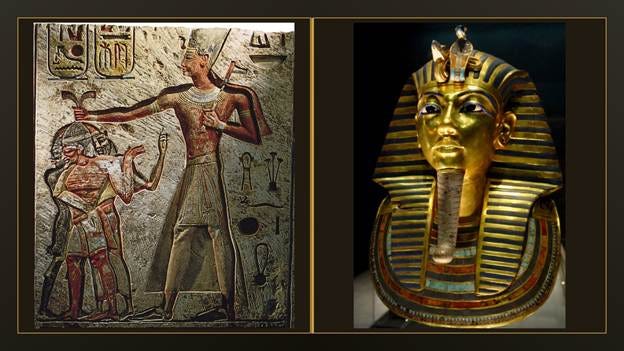
Ramesses II had everything that should have made him the face of ancient Egypt: a 66-year reign, colossal monuments, famous battle scenes, and a legacy so imposing that later pharaohs adopted his name. Tutankhamun, by contrast, ruled for only about a decade and died young. Yet it is the boy king’s gold mask—not the giant statues of Ramses the Great—that has become one of the most recognisable images on Earth. Why?
The answer is not that Tutankhamun was the greater ruler. It is that his story survived in a form no other New Kingdom pharaoh could match. When Howard Carter and an Egyptian excavation team uncovered his tomb in November 1922, they found the only New Kingdom royal burial discovered substantially intact: a compressed, dazzling world of thousands of objects, from chariots and shrines to jewellery and the now-iconic mask. That extraordinary survival, amplified by the media age, gave the modern world an intimate encounter with ancient Egypt and turned a relatively minor king into a global symbol.


