

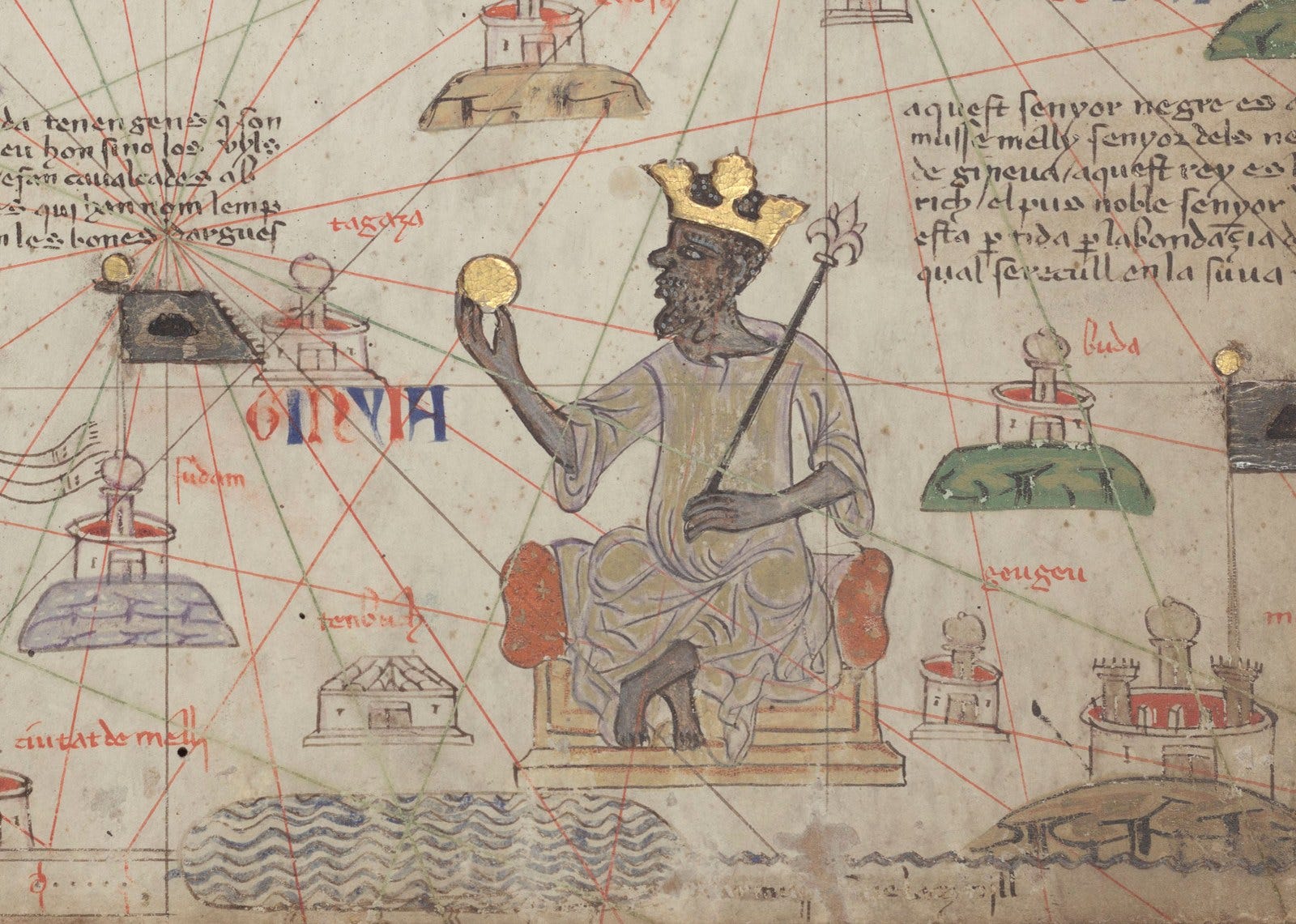
Gold poured into Cairo in July 1324, carried by the pilgrimage caravan of Mansa Musa, ruler of Mali, on his way to Mecca to fulfill the religious obligation of the hajj. The spending left a mark on the city’s markets that Egyptian writers were still describing years afterward. Every surviving account of it, however, comes from writers who were not standing in the street.
According to al-Umari, who wrote his account in the late 1330s, the people of Cairo were still eager to recount what the visitor from Mali had given and bought. His report survives in English in J.F.P. Hopkins’s translation. So was Musa really the richest person who ever lived?
The modern answer usually arrives as a dollar figure, and that figure traces to a list published on a celebrity wealth website in 2012. Behind it sits a harder problem, since a true net worth needs an inventory of assets and debts on a single date. The sources on Mali’s gold, and on his rivals for the title, show why that inventory cannot be made.
Where the Story of Musa’s Gold Began
al-Umari died in 1349 and was in his native Syria when the caravan passed through Egypt, as the historian Warren C. Schultz of DePaul University notes in his 2006 reappraisal of the episode. From the start of his own stay in Egypt, al-Umari says, he heard talk of the visit, and Cairenes were keen to describe the spending.
His informant was an emir who had gone out to meet Musa on behalf of Sultan al-Malik al-Nasir. By that account Musa “forwarded to the royal treasury many loads of unworked native gold” and explained his journey with a single line: “I came for the Pilgrimage and nothing else.”
When court officials pressed him to kiss the ground before the sultan, the emir recalled, Musa answered, “I make obeisance to God who created me!” He then prostrated himself, and the sultan half rose to greet him. al-Umari adds that Musa “flooded Cairo with his benefactions” and that he left no court emir or royal officeholder without the gift of a load of gold.
That Musa made the hajj in 1324, passed through Cairo and gave away and spent gold on a large scale there is Established, since Ibn Khaldun and other Mamluk era writers record the visit as well. His account also carries prices.

