

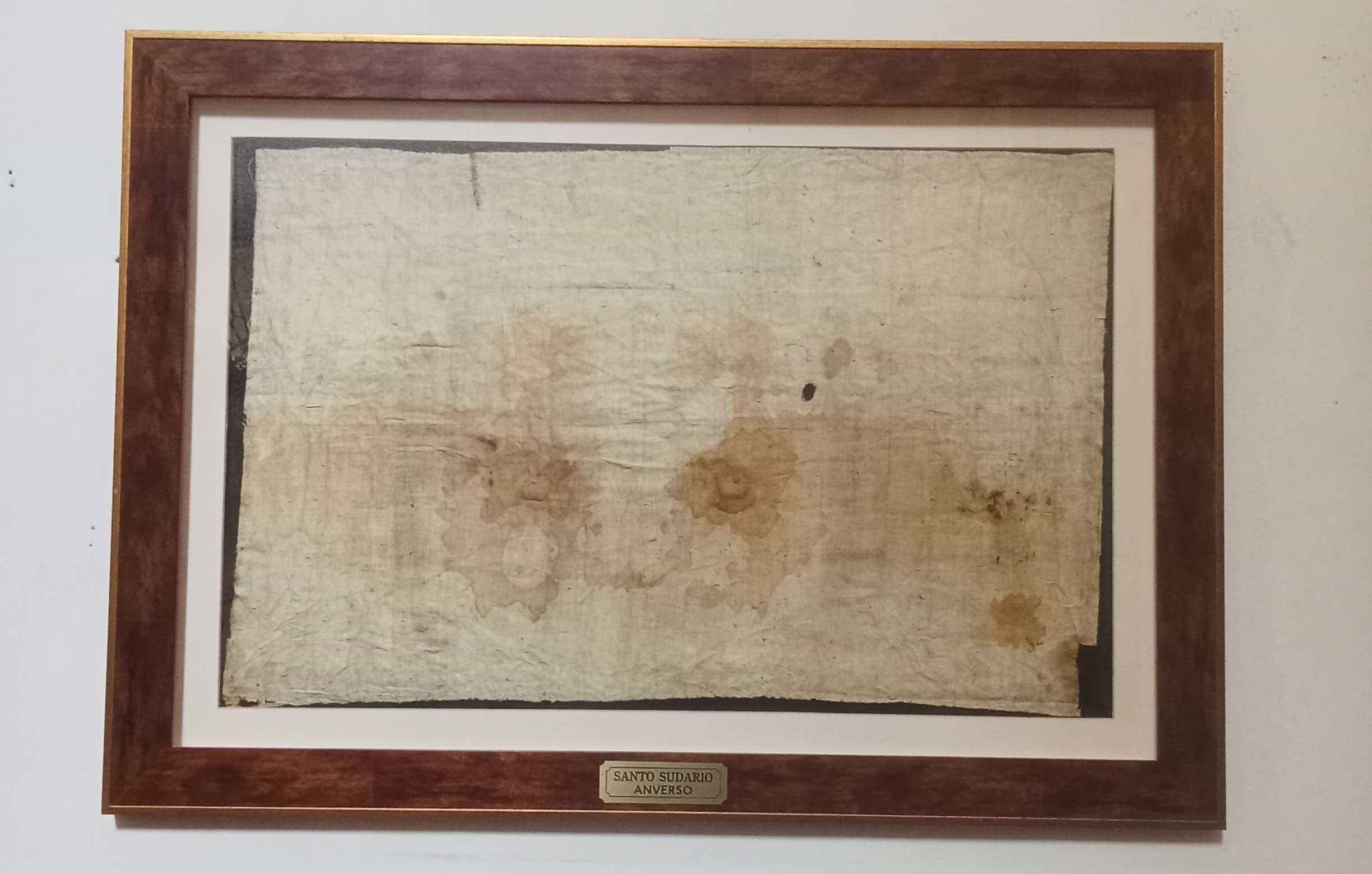
On August 25, 2026, the Journal of Cultural Heritage published online a study of a small, bloodstained linen cloth kept in the cathedral of Oviedo, in northern Spain. Since then, reports in the New York Post, Newsmax and the Daily Mail have tied the work to the Shroud of Turin, and one Daily Mail headline suggested it could prove the central event of the Easter story.
The cloth is the Sudarium of Oviedo, a piece of linen about 83 by 52 centimeters that carries stains but no image of a face or a body. For centuries it has been venerated as the cloth that covered the head of Jesus after his death, the face cloth that the Gospel of John describes lying apart from the other grave linens.
In the King James Version, John 20:7 describes “the napkin, that was about his head, not lying with the linen clothes, but wrapped together in a place by itself.” Many Christians have long read that verse as a picture of two separate cloths in the tomb, a long one for the body and a smaller one for the head.
The larger cloth, in that tradition, is the Shroud of Turin, the long linen in Italy that bears faint front and back images of a man who appears to have been crucified. If the two relics could be shown to have covered the same person, each would lend weight to the other. That hope has driven decades of comparison between them.
The new paper, by mathematician Pedro Peinado Rocamora and three colleagues, set itself a specific task. It combined high-resolution image analysis of the Sudarium’s marks with laboratory experiments using a model head, linen, bandages and a warmed blood substitute. Peinado has also told reporters about a separate computer comparison of the stains on the two cloths, a project he believes could change the debate.
So did this research show that the Sudarium and the Shroud of Turin covered one face? Can a carefully designed bandage experiment say anything about who wore the cloth, or when it was woven? And how does the new work sit beside the radiocarbon results that have framed the debate about both relics since the late 1980s?
The answers turn on a single sentence in the study’s abstract and a set of laboratory dates from Arizona, Toronto and Miami. They also turn on a document from the year 1075 that records a chest of relics being opened in the presence of a king and on a computer comparison of the bloodstains on both cloths.


