

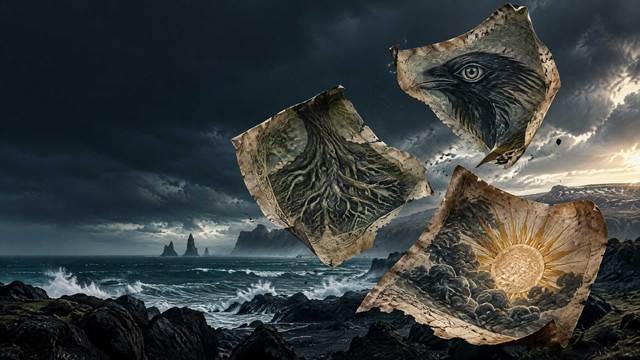
The Norse mythology we think you know may never have existed as a single story. It survives today as a confident, cinematic arc, but no Viking Age author left behind the volume that tells it from beginning to end.
Ginnungagap opens and the first beings appear. Odin and his brothers shape the world, while the Norns govern fate beneath Yggdrasil. Ragnarök consumes the gods, and a renewed earth rises from the sea.
The problem is that no authorized Viking Age book preserves this plot. The modern “canon” is a reconstruction, assembled from anonymous poems, skaldic verses quoted in later prose, brief allusions, images, place-names, archaeological objects, and accounts written by Christian authors. The sources overlap, but they do not always agree.
Those fault lines are not flaws to be explained away but the real story: clues to how myths travelled, changed shape, and were later woven into the version we think we know. But if we follow them, the familiar Norse cosmos becomes stranger, richer, and far more alive.
