Someone engineered a wooden structure 476,000 years ago. Yes you read it correctly…
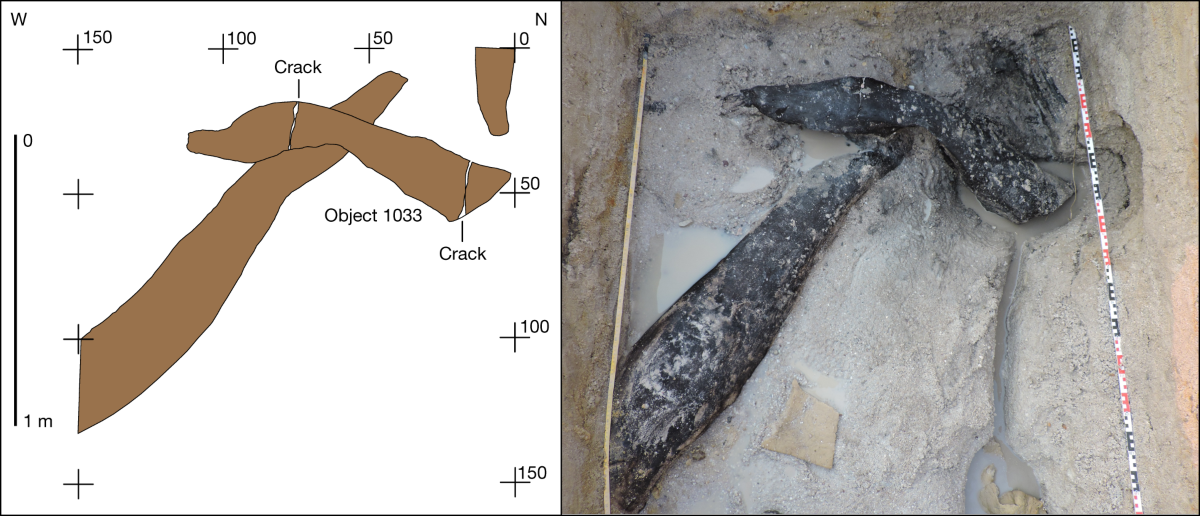
That sentence should not fit the history most of us were taught. The oldest widely accepted fossils of Homo sapiens are about 300,000 years old. Yet beside a river in Zambia, archaeologists uncovered two heavy logs that had been deliberately shaped and locked together through a broad cut notch. Whoever made them lived roughly 176,000 years before our species appears clearly in the fossil record.
And this was not a sharpened stick or a loose branch carried into place by water. One piece had been chopped, scraped, narrowed, and fitted over another. The builders were turning separate parts into a construction, making it the earliest known structural use of wood anywhere in the world.
No human bones were found beside it, the builders have no agreed name, and the object they created has partly vanished. It may have supported a platform, a walkway, a dwelling, or something archaeologists have not yet imagined? What survives is only the join, an intentional act preserved in mud for almost half a million years.
How can researchers be certain that it was built rather than formed by nature? How was wood dated beyond the reach of radiocarbon testing? And if human ancestors this ancient could plan and assemble a large structure, how much of their technological world disappeared simply because wood normally rots? The answers do more than add one remarkable object to prehistory. They expose how incomplete our picture of early human intelligence may be.