

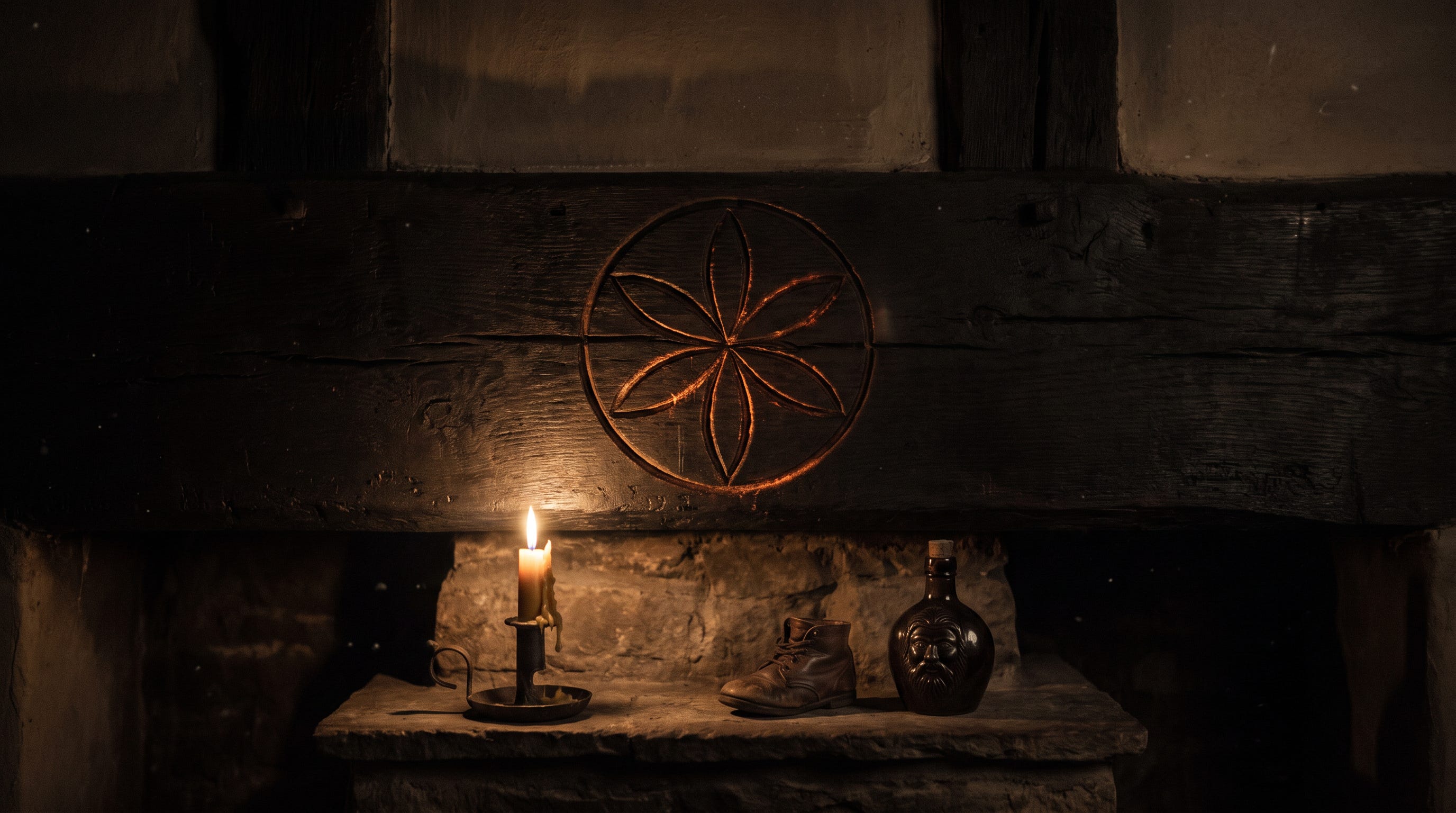
Witch marks are small symbols cut or scribed into the stone and timber of old buildings, usually close to the places where a house opens to the world outside. Historic England, which prefers the term apotropaic marks, explains that “The word ‘apotropaic’ comes from the Greek word for averting evil.” The name tells you what people are believed to have wanted from them.
According to Historic England, the marks “were usually scribed onto stone or woodwork near a building’s entrance points, particularly doorways, windows and fireplaces,” and they are thought to have been meant to protect the people inside from witches and evil spirits. The agency places such magical symbols and ritual objects in everyday life “from around the 16th to the early 19th century.” But were they really made to keep witches out?
The most useful modern count of these marks in England came from a public appeal. In a feature by Nicholas Molyneux, Historic England wrote: “On Halloween 2016, we asked the public to help us identify and record apotropaic markings, also known as witches’ marks.” The appeal drew “over 600 responses from the public,” and a follow-up page added that “Over 100 of these were from different countries, namely Scotland and Wales.” Those figures are Established.
The English responses were broken down by region, with 150 from the East of England, 114 from the South West, 104 from the South East and only 11 from London. However, these were reports sent in by members of the public, so the regional spread reflects who answered the call as much as where marks survive. They are a sample of what people noticed, rather than a census.

