

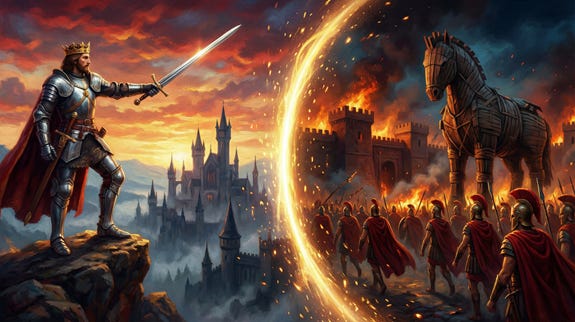
When we think of King Arthur, we picture the quintessential British hero: a noble king pulling a sword from a stone, presiding over the Knights of the Round Table, and defending his homeland against Saxon invaders. He is the ultimate symbol of British mythology. But what if the roots of this legendary figure aren’t entirely British? What if the origins of Camelot can be traced back to the ashes of Troy, the epic poetry of Virgil, and the classical heroes of ancient Greece and Rome? Prepare to have your understanding of Arthurian legend completely transformed as Dr James Turner uncovers the surprising classical roots of King Arthur.
The Foundations of the Legend
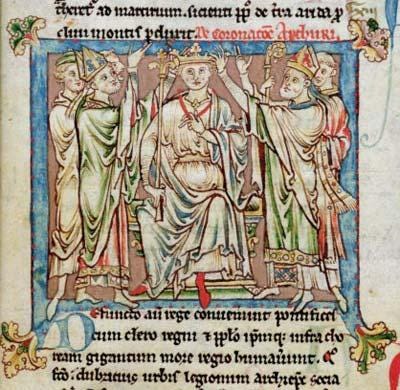
The Historia Brittonum or History of the Britons is the first great pillar upon which the mighty edifice of the Arthurian legends rest. Unlike most texts from this era and part of the world, dating this foundational work of pseudo history is relatively simple.
Helpfully, the Historia’s fourth section or book explicitly states that it was written 829 years after the birth of Christ. A date which tallies rather well with claims made elsewhere in the text that suggest it was written relatively early in the reign of Merfyn Frych, a King of Gwyennd who took the throne in 825.

