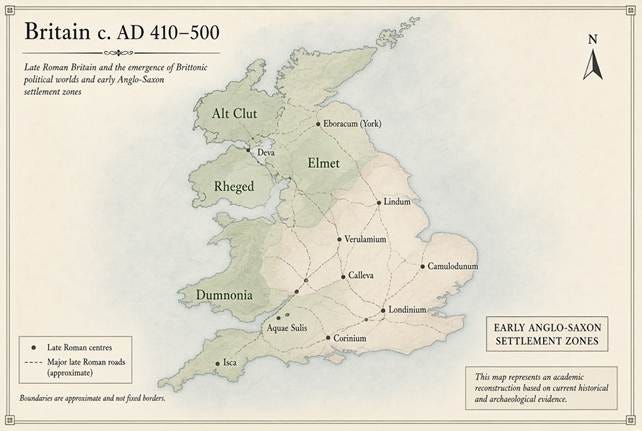
“The Romans left Britain” is one of those sentences that sounds clearer than the event it describes. Rome did leave, if by Rome we mean the western imperial state: its tax system, military command, regular coin supply and the administrative machinery that had governed much of Britain for centuries. By the early fifth century, towns and local elites were being forced to organise without the apparatus of the province. But the phrase becomes misleading when it quietly turns an administrative collapse into a population disappearance.
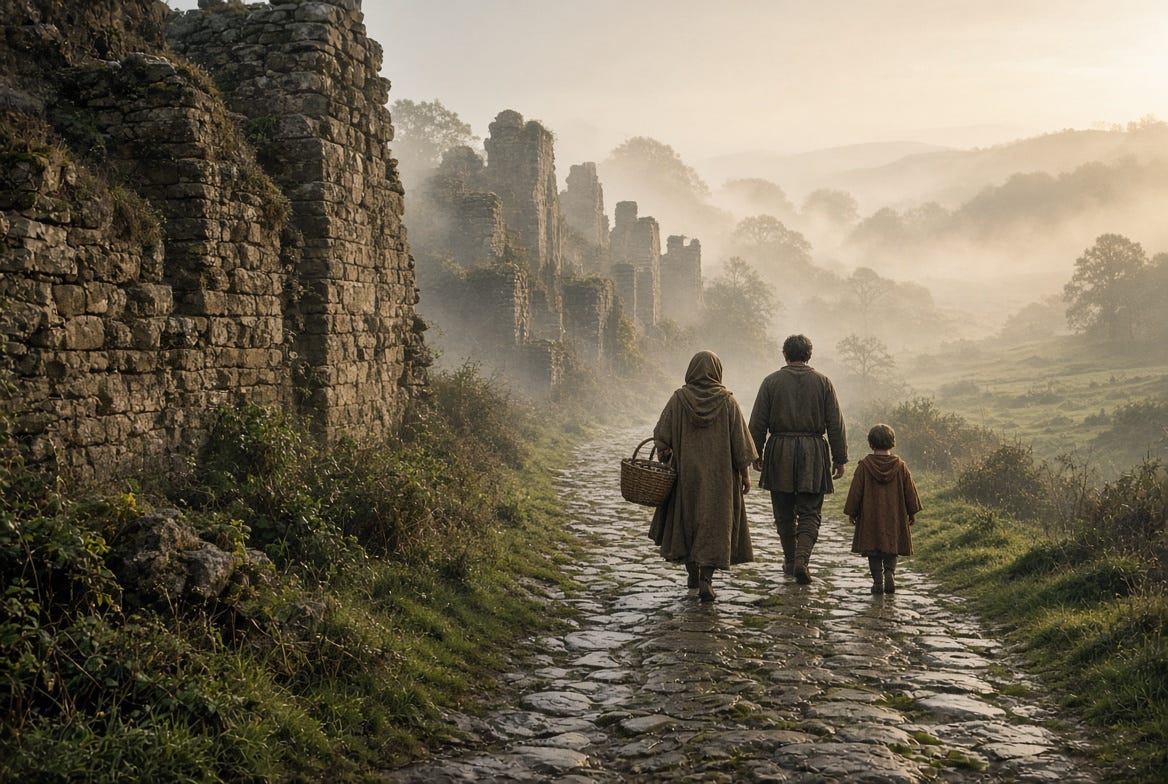
The people did not leave with the government.
Roman Britain had never been a sealed ethnic block. It contained communities rooted in Britain long before the conquest, families shaped by almost four centuries of imperial rule, soldiers and officials posted from other provinces, merchants, craftspeople, enslaved people, freed people and migrants from across Europe, North Africa and the eastern Mediterranean. The British Museum describes Romano-British society as the product of local Iron Age societies meeting Roman law, administration, engineering, religion, art and imported populations. When imperial authority fractured around AD 410, that mixture did not revert to an imagined pre-Roman purity. Nor did it vanish and wait for a new people to arrive.
What happened instead was harder to narrate and therefore more interesting: continuity, migration, political fragmentation and cultural reinvention happened at the same time.