


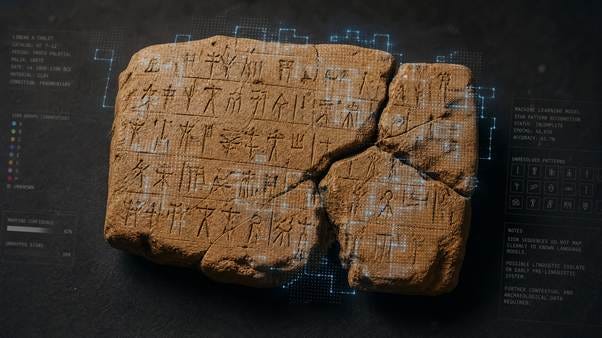
In June 2026, an Artificial Intelligence (AI) engineer claimed to have cracked the code of Linear A, a script written on a clay tablet by the Minoans approximately 3,500 years ago, and the viral news story demonstrated how ML technology impacts archaeological research as well as its limitations.
However, before sharing the results of the engineer’s work with the world, it would be prudent to first understand how this project was accomplished; that is, by examining what the AI engineer did to create the Linear A ‘crack,’ and how his training in linguistics and language development helped inform the final outcome of his work.
As you may be aware, the majority of Linear A tablets found to date are located on the island of Crete and have been studied by scholars for over one hundred years; however, no one has been able to translate them. What does this mean for the potential future of AI technology in archaeology? The answer lies in understanding how the AI engineer approached the problem of Linear A and then how he subsequently used this knowledge to create the AI’s version of Linear A.
The debate that followed tells you everything you need to know about what artificial intelligence can and cannot do when it comes face to face with a genuinely unsolved mystery.
A Script That Has Defied a Century of Scholarship
Minoan Linear A, a writing system used on the Mediterranean island of Crete by the Minoans from approximately 1800 to 1450 BCE, served as the main script for official and religious documents of the Minoan civilization. It was one of the most progressive civilizations of the Bronze Age and is thus considered one of the most advanced cultures of the Mediterranean Sea area at that time. To date, no known Linear A documents have been deciphered since their “rediscovery” by Sir Arthur Evans through an archaeological study conducted in 1900.
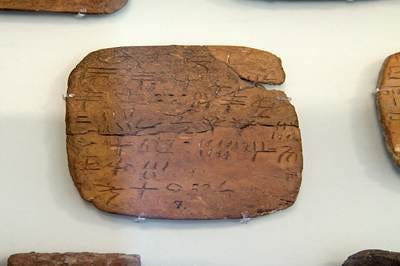
The term “Linear” was given to the character sets of the Linear A writing system because they were created through the process of inscribing directly into clay rather than through drawing the character shapes as done with Cretan hieroglyphs, which had similar inscribing dates, but are not decipherable today. As a member of an independent writing family of scripts called Linear A were developed independently of the Egyptian and Mesopotamian writing systems; therefore, Linear A has been identified as the parent of a second script called Linear B (which was the script used by the Mycenaean Greeks) after they captured the island of Crete around 1450.
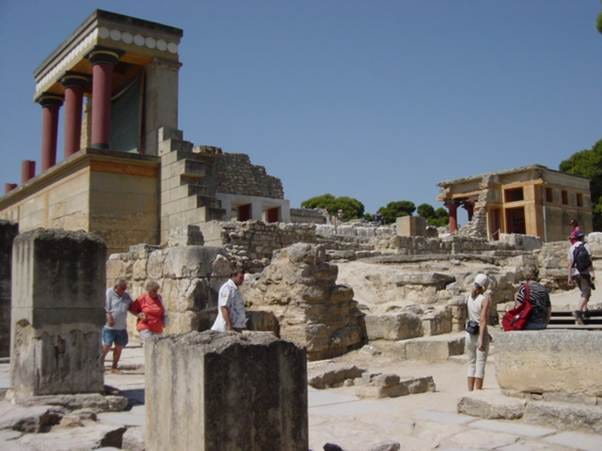
Linear B was deciphered in 1952 by Michael Ventris, a British architect who had taught himself ancient languages as a hobby. He demonstrated that Linear B was an early form of Greek, a revelation that transformed the study of ancient history. The problem is that Linear A and Linear B, while sharing many of the same symbols, do not lead to the same place. Applying the sound values from Linear B to Linear A produces sequences that do not match any known language. That single fact has blocked every attempt at decipherment for more than seventy years.
The reason Linear A is so hard to crack is that it has no anchor. Every ancient language that has ever been successfully deciphered needed one. The Rosetta Stone gave scholars the key to Egyptian hieroglyphs because it contained the same text in three scripts, one of which was ancient Greek. The Behistun Inscription unlocked Old Persian cuneiform for the same reason. Linear B was cracked because researchers could compare it to known Greek vocabulary. Linear A has none of that. It is classified as a language isolate, meaning it has no confirmed relationship to any known language, living or dead.
The Engineer Who Said He Found the Key
Tom Di Mino is not a professional linguist. He lives in New York’s Hudson Valley, has no formal academic training in ancient languages, and has taught himself classical history and linguistics since he was eighteen years old. Over the years he developed working knowledge of eight ancient languages, including Attic Greek, Latin, Sanskrit, Arabic, and Ugaritic. He first became interested in Linear A seven years ago and has traveled to Crete twice to study the inscriptions firsthand. His concentrated work on the script began in January 2026, and he says the breakthrough came on May 22.
The starting point was a prayer text that appears repeatedly at five sanctuary sites across Crete. Most of the words in the prayer were already partially understood by scholars, but one verb had no known meaning. Di Mino traced that verb to a root shared with Hebrew and Akkadian, tied to the idea of living in or settling a place. Once he assigned that reading, he suggested the passage reads much like a later Hebrew prayer, but directed at a goddess rather than a god.
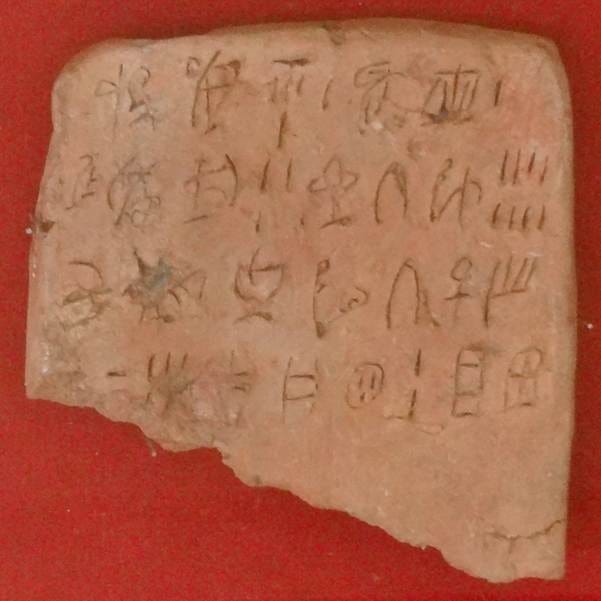
In order to verify that these values derived from this reading are applicable throughout the entirety of the record, DiMino took advantage of an artificial intelligence-based coding assistant to create Python scripts for comparing the proposed word values to two digital repositories of Linear A text called GORILA and SigLA, which collectively constitute nearly all remaining Linear A writing. DiMino states the results resulted in: 40 unique signs being proposed to have sound value previously unknown; 408 Linear A translated word candidates; and 9 pages of drafted Grammar of the prayer text.
Currently, DiMino’s dissertation research is being reviewed by Linguistic scholars at both Rutgers University and The University of Cambridge. It should be noted that DiMino was not the original proposer of a possible Semitic link to Linear A. A researcher named Cyrus Gordon suggested a similar connection back in 1957 when he posited that the Minoan civilization was composed of people speaking some form of Semitic language. At that time and even today, very few linguists were supportive of his hypothesis, and thus the controversy surrounding it has continued to exist.
What AI Actually Did, and What It Could Not
It is worth being precise about what role artificial intelligence played in this story, because the headlines tend to blur a crucial distinction. The AI did not have the idea. Tom Di Mino did. The AI was a research assistant. It rapidly cross checked a human hypothesis against thousands of characters, work that would have taken a human researcher months by hand. That division of labour is the pattern worth paying attention to, far more than any single claim that is still under review.
Jane Adkins, a PhD candidate at Dublin City University’s School of Computing who studies computational approaches to undeciphered scripts, described the situation clearly in a July 2026 analysis. AI is genuinely strong at large scale pattern testing, she noted. It can check whether a hunch about one sign or word holds up across an entire archive in minutes instead of years. It can spot repeated sequences a human eye would miss, and restore damaged or fragmentary inscriptions by predicting likely missing characters.
AI also does something distinct called cross lingual transfer, where a model trained on a known language can sometimes infer patterns in a closely related unknown one. This approach has already been used successfully on scripts such as Ugaritic, an extinct Semitic language spoken during the late Bronze Age in what is now Syria, where the language family was known and provided the necessary anchor.
But there is a hard ceiling. Statistical pattern matching cannot manufacture meaning out of nothing. It needs an anchor to tell it which patterns are meaningful and which are coincidence. Linear A is hard precisely because that anchor is missing, and no amount of computing power invents one from scratch.
The Problem With a Dataset of 7,500 Characters
The number 7,500 is the most significant figure when discussing this issue. 7,500 is the approximate total number of characters contained in the entire known corpus of Linear A, which can be compared to the length of an extensive magazine article. This number easily fits on one screen. With such limited data available, you can find an abundance of hypotheses that have at least some support based on this relativistic evidence.
This is not merely a theoretical dilemma. Researchers who specialize in computational linguistics have continually illustrated this problem in their studies. When you utilise a small corpus of a given language and apply hypothetical sound value assignments to the written symbols in that corpus and then run algorithms against a large database of known languages to search for matches, you will nearly always discover matches somewhere within that database. The algorithm is functioning accurately, as it was specifically programmed to perform. However, the primary uncertainty with the utilisation of these algorithms lies in determining if the posted matches posted represent coincidental or meaningful findings, and this cannot be determined by the algorithm itself.
As a result, verifying any of these machine-generated allegations about these languages is incredibly challenging, and the issue extends well beyond any individual example. Ordinarily, in order to verify a proposed translation, you could compare it with the opinions of native speakers, with other written materials, or with the conclusions reached by experts over generations. For a language that has yet to be deciphered, none of these possibilities are viable, and unless we develop a time machine, there is no way to confirm our findings.
Consequently, evidence and claims in this field rely heavily on external independent expert opinions and peer-reviewed publications, rather than statistical confidence levels. As a result, the claims of “AI detected a pattern” and “AI discovered the correct interpretation” are sometimes easily intermingled, yet represent fundamentally different assertions.
The Road Ahead
There’s nothing to suggest that using AI will mean that Linear A has reached a dead end. In fact, it’s actually going to speed up many of the years of research that will take place with traditional methods of cross-referencing by combining years of work together in as little as a few minutes, and allows more people to participate in solving the mysteries surrounding Linear A than what was possible through institutional means. The work carried out by Di Mino shows that a motivated person who has access to modern technology can now tackle issues that previously required a university department.
The field of study of Linear A has not stopped growing and developing, as demonstrated through the ongoing research at the University of Melbourne. Research at that university is examining how to use deep neural network models to assist in the decipherment of Linear A. Their focus is on a machine-assisted method of analysing the structure of the written form of Linear A as opposed to performing an analysis to translate it. Their approach is a more conservative and slower approach, but is being done using the same methodology that all of the other Linear A scholarly work is using.
The honest conclusion is that AI will play the same role in deciphering languages as the role it currently is expected to play until one of two things occur. The first possibility is if there is a future discovery on Crete or in another location that uncovers a bilingual text between a Linear A inscription and an inscribed language that is known. The second alternative is if there can be enough validated comparative data to prove that the Minoan language is part of the same family as a known language. There is only so much that AI can do to identify patterns in Linear A until that time comes.
Top Image: Interpretive visualization of an ancient script resisting digital analysis. Image generated for Ancient Origins Unleashed.
By Aris Manus
References
Adkins, Jane. “Cracking the Code: Can AI Help Us Decipher Ancient Languages?” The Conversation, 27 July 2026. https://theconversation.com/cracking-the-code-can-ai-help-us-decipher-ancient-languages-288238
Moeed, Abdul. “AI Engineer Claims to Have Deciphered Linear A.” Greek Reporter, 30 July 2026. https://greekreporter.com/2026/07/30/ai-engineer-claim-decipher-linear-a/
“AI Engineer Claims to Have Cracked Linear A.” Hacker News, 19 June 2026. https://news.ycombinator.com/item?id=48600107
“Linear A.” Wikipedia, The Free Encyclopedia. https://en.wikipedia.org/wiki/Linear_A
“Linear B.” Wikipedia, The Free Encyclopedia. https://en.wikipedia.org/wiki/Linear_B
Rendsburg, Gary A. “Cyrus H. Gordon and Minoan Linear A.” Rutgers University, 1996. https://jewishstudies.rutgers.edu/images/documents/faculty/Rendsburg/Rendsburg-SomeoneSucceedDeciphering-1996.pdf
University of Melbourne. “Using Deep Neural Network Models to Aid in the Decipherment of Linear A.” Melbourne Disability and Archaeology Project, 2024. https://www.unimelb.edu.au/mdap/research/2024-collaborations/using-deep-neural-network-models-in-the-decipherment-of-linear-a

fascinating.. but one thing wasn’t clear to me.. and that is have they applied the ‘crack’ to remaining data and what have they found? i wasn’t quite clear on this point after reading the article
Ok but if the found method is applied, what fo the texts read?