

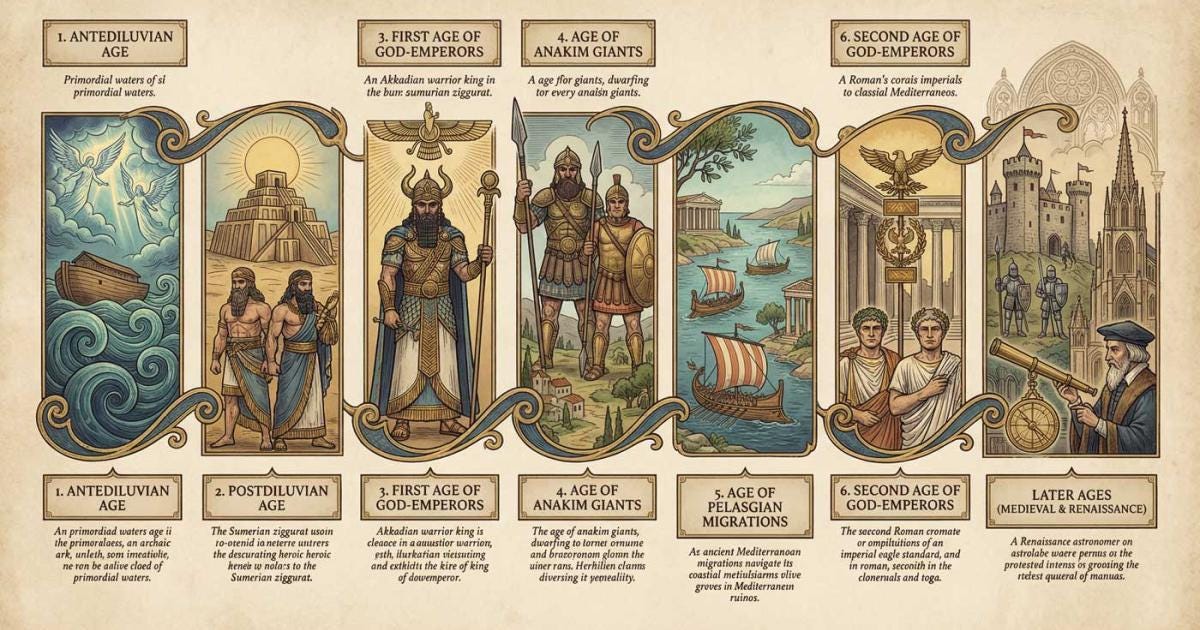
Recent years have witnessed a surge of interest in the enigmatic figures known as the Nephilim, the “fallen ones” of biblical lore. However, a true understanding of these beings requires a broader perspective, one that acknowledges a long and remarkably consistent tradition of their existence throughout the ancient world. From the fertile crescent of Mesopotamia to the sands of Egypt and the shores of the Mediterranean, tales of god-kings, mighty heroes, and giants have echoed through the corridors of history. The term “Nephilim,” most likely meaning “fallen ones,” is often associated with giants, yet Genesis also describes them as “mighty men, men of renown,” a title befitting the great kings of antiquity.
This article provides an overview of the nine distinct ages of the Nephilim, a framework proposed by scholar Dr Willem McLoud. We will journey through these epochs, from the mists of the Antediluvian Age to the rise and fall of god-emperors in Akkad and Rome, exploring the rich and complex lore surrounding these children of the “Sons of God.” By examining Sumerian epics, Egyptian texts, and biblical accounts, we will uncover the enduring legacy of the Nephilim and their profound impact on the civilizations of the ancient world.
Nine Ages of the Nephilim: A Brief History by Dr Willem McLoud. Get it on Amazon!
Who were the Nephilim?
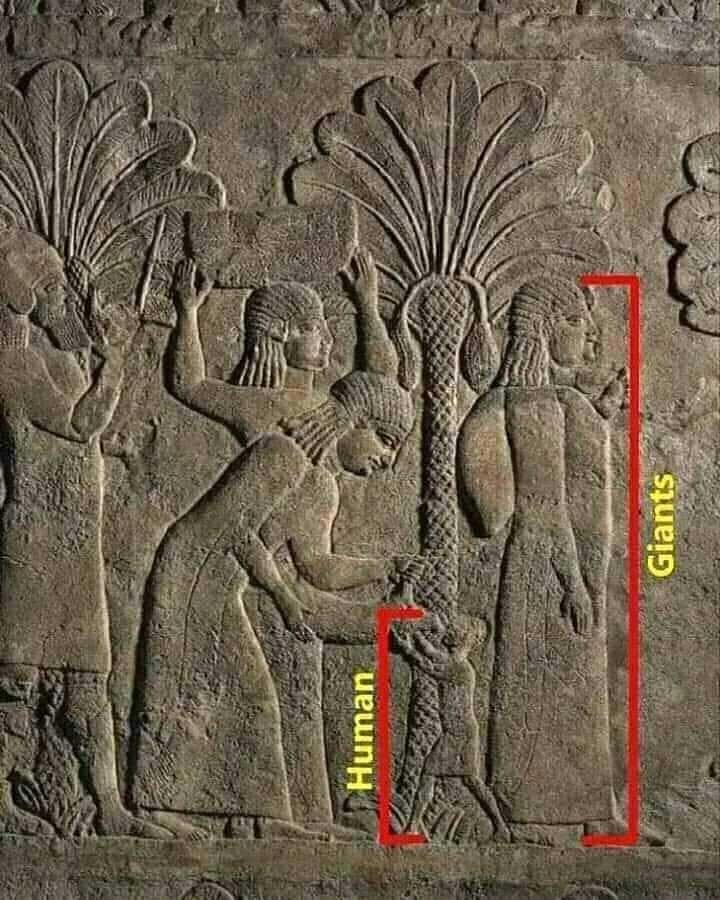
Sumerian relief (Source: Tamerah)
The two basic characteristics of the Nephilim, namely that they were children of the so-called Sons of God and that they were fallen ones, are attested to in other versions of the same anciet tradition such as the Sumerian tradition and Egyptian Edfu tradition.
The biblical expression, “Sons of God”, is simply another way of referring to the gods, as we read in Psalms 82:6: “You are gods, and all of you are children of the Most High (i.e. Sons of God)”. The same term appears as Sons of El in the Ugarit texts (14th to 13th century BC) and long before that as Anunna or Anunnaki in ancient Sumerian and Akkadian texts, with Anunna meaning “seed (i.e. sons) of the prince (An, the equivalent of El and father of the gods).” The House of Uruk, who, according to the Sumerian King List, ruled after the deluge, are described as scions of the gods (more specifically the son god).
As for the idea of “fallen ones”, this motif goes back to the oldest layer of traditions about the gods in the rather crude metaphor of divine seed that fell on the earth. In ancient Sumer, it was An’s seed or Enki’s seed that fell on the earth. The Sebittu gods (as well as other daemons) were born from An’s fallen seed whereas eight gods were born from Enki’s seed (with Enki meaning “lord of the land/earth”).
In the Edfu texts (written on the walls of the Horus temple at Edfu in southern Egypt) a primitive earth god’s seed fell in the primaeval waters/earth in the time before the deluge and from which eight gods were born. From these eight fallen gods a so-called “August Stripling” was moreover born and later on three groups of beings, namely the Shebtiw, the sages and the builder gods. Similar traditions appear among the Hurrians and the Greeks and as well as in India. Traditions of Giants born from this fallen seed are found among the Hurrians and the Greeks and also in the Persian Gulf Region.
We can now proceed with a short overview of the nine identified ages of the Nephilim.
