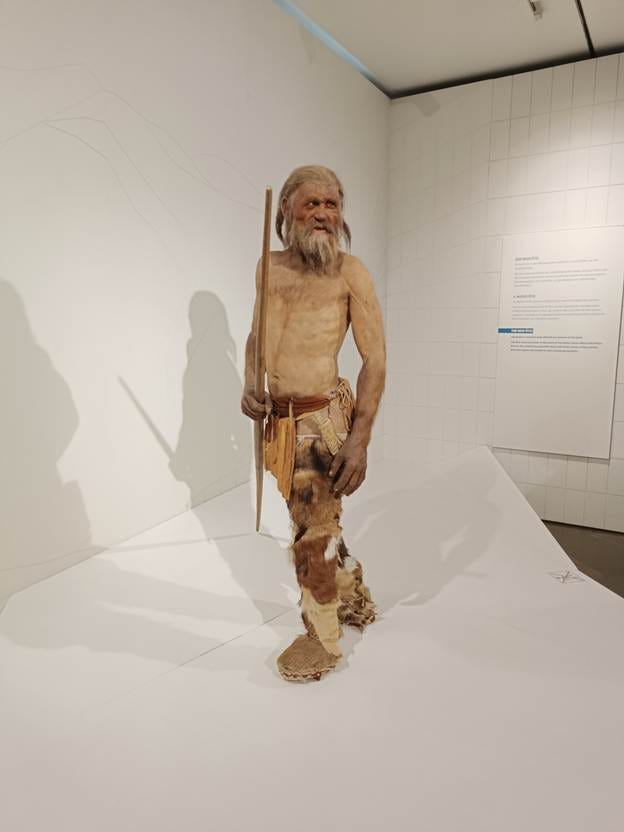
For over three decades, the world pictured Ötzi the Iceman as a rugged, fair-skinned, and hairy prehistoric hunter braving the freezing Alpine winds. Discovered by chance in 1991 by two German hikers, his 5,300-year-old mummified body became an instant global sensation, offering an unprecedented window into the Copper Age. But what if everything we thought we knew about his appearance and ancestry was a lie?
Groundbreaking new DNA analyses have just shattered our long-held assumptions, revealing a startling new reality: Ötzi was actually dark-skinned, dark-eyed, and balding. Even more astonishing, his genetic code proves he was a profound outlier—a man whose bloodline has completely vanished from the earth. As the ice continues to melt, the true story of Europe’s most famous mummy is finally coming to light, and it is far more mysterious than anyone ever imagined.
The most recent revelations come from two groundbreaking studies that have fundamentally altered our understanding of the Iceman. The first, published in Cell Genomics in 2023, employed advanced sequencing technology to generate a high-coverage genome that corrected previous misconceptions about Ötzi’s ancestry and appearance (Wang et al., 2023). The second, a 2025 Nature Communications study, placed Ötzi within the broader genetic landscape of his Alpine homeland by analyzing 47 individuals who lived in the same region between 6400 and 1300 BCE (Croze et al., 2025). Together, these studies paint a portrait of a man who was both part of his world and strangely apart from it—a genetic anomaly in a population that had remained remarkably stable for millennia.