

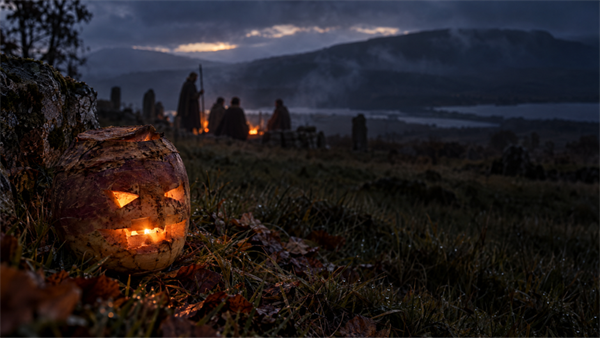
Halloween has a ready-made origin story. Long before children dressed as vampires and superheroes, the Celts supposedly gathered around fires on a night called Samhain. It was then, when the boundary between the living and the dead dissolved and the spirits crossed into the human world. So, people wore disguises to avoid them.
Centuries later, that pagan ritual survived as Halloween. It is a superb story but it is too neat, right?
Yes, Samhain was real, it marked the turning of the Irish year from summer toward winter, with the night before 1 November carrying particular weight. It was a time for food, games, disguises, household protection, and stories of a world beyond ordinary human sight. Yet the modern Halloween of pumpkins, trick-or-treating, witches, and consumer excess did not emerge from a single surviving ritual. It was assembled over centuries from Irish seasonal tradition, medieval Christian observance, British and Scottish customs, folk tales, migration, and American reinvention.
The simplification has hidden the most interesting part, that Samhain was not a prehistoric “festival of the dead.” In Irish storytelling, it was a moment when the world became porous. The other side was not always a place of devils and terror, it could be a place of beauty, danger, temptation, and impossible abundance.

