

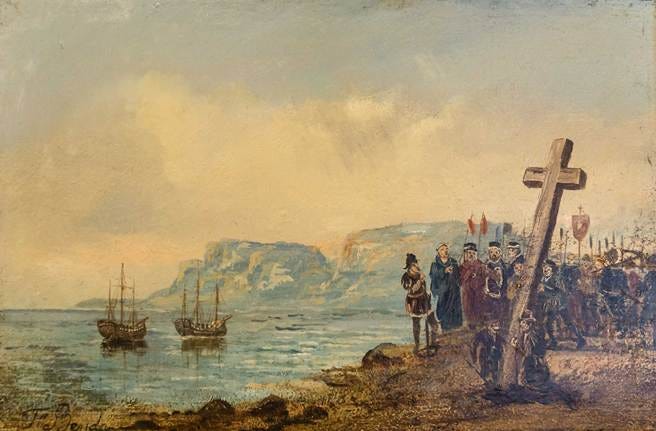
Imagine a country the size of modern-day London deciding to rewrite the map of the entire planet and succeeding. In the fifteenth century, while the rest of Europe was squabbling over borders, a handful of visionaries from a windswept Atlantic peninsula launched the most audacious startup in human history. Not only they just discover new lands, but they engineered the first global supply chain, disrupted a monopoly that had stood for centuries, and accidentally stumbled upon continents. Yet, ask anyone today who started the Age of Discovery, and they’ll hand the credit to Columbus or Magellan. The true architects, the spies, the strategists, and the sailors who literally sailed off the edge of the known world, have been erased from our collective memory. This is the untold story of the original globalizers, a tale of breathtaking risk, ruthless economics, and the forgotten men who built the modern world from scratch.
In the spring of 1488, Bartolomeu Dias stood at the prow of his battered caravel, Atlantic wind gripping at his cloak and salt-stung tears marking fresh tracks through the dirt of his weather-cracked cheeks. He wept, not from relief nor triumph, but from the particular anguish of a man who can see exactly what lies beyond his grasp. Behind him, two years of storms and near-mutiny pressed their memory inside his bones. Ahead, the gateway to India shimmered on the horizon while his crew refused to take another step.
He named that rocky headland the Cape of Storms. His king renamed it the Cape of Good Hope.
That gap between those two names, between the sailor’s raw dread and the monarch’s calculated optimism, tells you almost everything you need to know about the Portuguese Age of Discovery. It was not born of romance but of economics, of geopolitical necessity, of a small Atlantic kingdom that had decided, with breathtaking audacity, to redesign the map of the world.
And then almost inexplicably, it was forgotten.

