

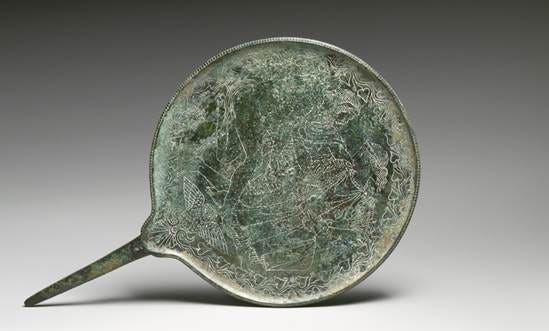
The Etruscan civilization flourished from the eighth to the first centuries BCE. Centered primarily in what are now Tuscany, western Umbria, and northern Lazio, its settlements extended north into the Po Valley and south into Campania. Fertile farmland, rich mineral resources, and skilled manufacturing powered a thriving Mediterranean trade, making the Etruscans a major cultural and political force within Italy and across the wider sea. Their prosperity peaked between the eighth and fifth centuries BCE, when Etruscan city-states controlled mines, ports, and trade routes linking central Italy with Greeks, Phoenicians, Sardinians, Celts, and other Italic peoples.
Within a few hundred years, however, the civilization entered a deep decline as Rome tightened its grip on central Italy. The Etruscans had a written language, but no historical, mythological, or literary narratives in it have survived. The dominance of Greek and Roman traditions in the sources available to us has left the Etruscans almost silent in the standard history of the ancient world.
The loss is partly a matter of survival, not simply silence. Texts written on perishable materials such as linen or wax tablets were unlikely to endure, leaving Greek and Roman accounts, with their inherent biases, as the only extended narratives about Etruscan society. Most surviving Etruscan written evidence consists of fragments, notably inscriptions on tombs, funerary ceramics, and other durable objects.
Yet the Etruscans were a compelling civilization that contributed greatly to Rome’s rise. This article explores their background and accomplishments, asking where they came from, who they were, and what happened to their enigmatic civilization. Although we know where the Etruscans lived, many aspects of their way of life remain the subject of debate.

