


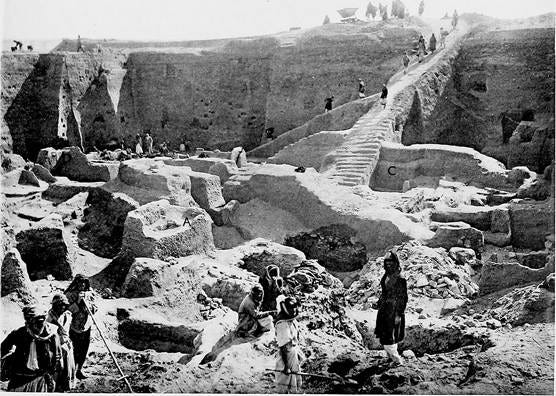
In the ancient city of Uruk, beneath the floor of a Neo Sumerian house, archaeologists uncovered a grave that broke all the rules of the ancient world. The skeleton belonged to a man between thirty four and forty five years old, buried in the corner of two walls. His sternum was broken into three pieces. Both of his hands were missing. His upper arms and right forearm were snapped, with marks near the wrist ends suggesting violent blows or cuts. Most chilling of all, whoever buried him had placed a heavy, 18 by 20 centimeter block of limestone squarely over his feet.
In ancient Mesopotamia, the dead were usually treated with profound care. Families buried their relatives beneath their homes or in designated cemeteries, providing them with clay pots, offerings, and the necessary rites to ensure a peaceful afterlife. Uruk Grave 9 was something entirely different. The missing hands, the shattered arms, and the heavy stone suggest a dark possibility: the people who buried this man were terrified that he might get back up.
For decades, archaeology has recognized deviant burials in Europe, graves where the dead were decapitated, staked, or weighed down with rocks to prevent them from rising as vampires or revenants. Now, a comprehensive new review of more than 5,000 published graves suggests that similar fears may have haunted the civilizations of the ancient Near East. What exactly were they so afraid of? Keep reading to discover the terrifying truth behind these ancient burials.


.jpg)