


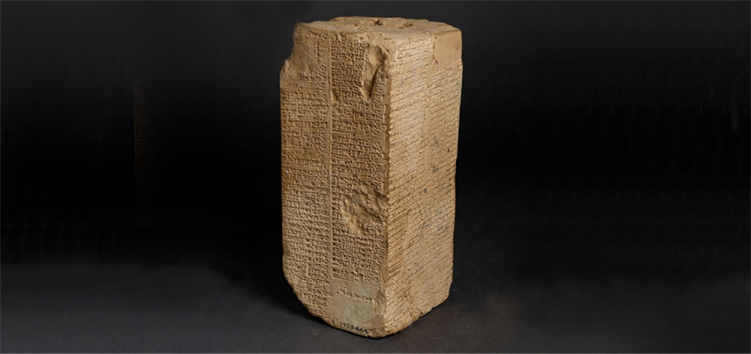
In 1922, a British archaeologist named Herbert Weld Blundell was excavating the ruins of Larsa, an ancient city in what is now southern Iraq. Digging through the dust of Mesopotamia, his team uncovered a block of baked clay.
It was a vertical prism, about eight inches tall, covered on all four sides with dense, wedge-shaped cuneiform script. When scholars at Oxford University finally translated it, they realized they were looking at one of the most extraordinary historical documents ever found.
It was a master list of kings. It recorded the rulers of Sumer, the world’s first known civilization in chronological order.
But the list did not begin with normal human history. It began at the dawn of time, with a statement that still causes debate among historians today:
“After the kingship descended from heaven, the kingship was in Eridu.”
What followed was a list of eight kings who ruled before a massive, civilization-destroying flood. And according to the tablet, these eight kings did not rule for decades. They ruled for tens of thousands of years each.
Then, the tablet says, the Flood came. And everything changed.
