


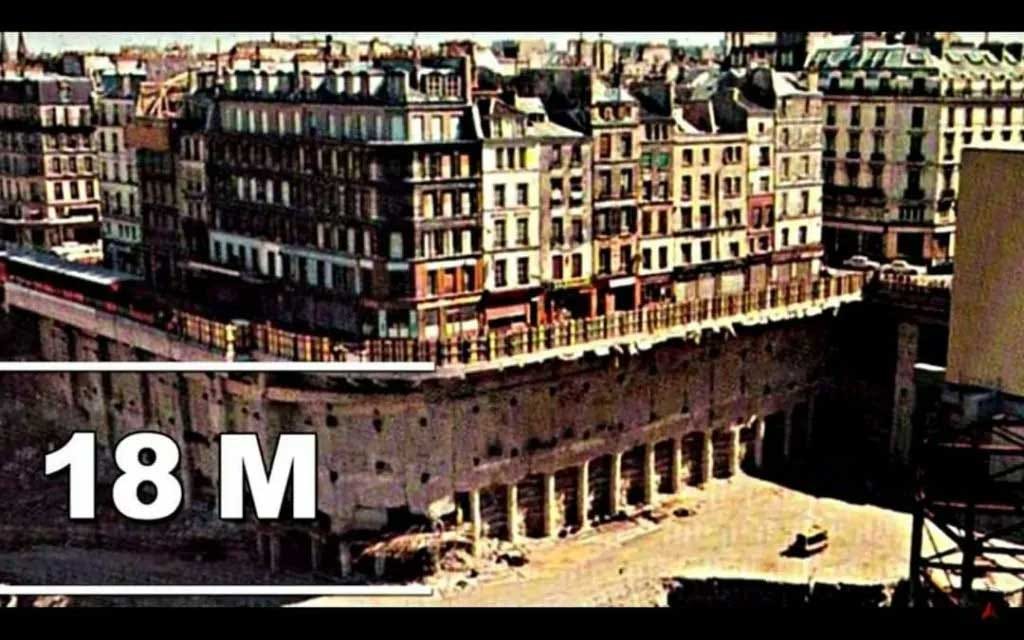
If you spend enough time looking at the lower levels of 19th-century buildings in any major Western city, you will eventually notice something strange. The windows of the ground floor often sit below the level of the pavement. Sometimes, entire doors appear to have been bricked up halfway down, as if the street itself rose up to swallow the building.
For most of modern history, this architectural quirk was ignored. But over the last decade, it has become the visual anchor for one of the most sprawling, rapidly growing, and visually compelling alternative histories of our time: the Tartarian Empire and the Mud Flood.
With an estimated 50 million believers across social media platforms, the Tartaria theory proposes a radical rewriting of the human timeline. It claims that a vast, technologically advanced, and peaceful global empire called Tartaria existed until the mid-19th century. This empire, the theory goes, was deliberately destroyed by a catastrophic “mud flood”, a global deluge of earth and sludge engineered by a shadowy elite to wipe out the Tartarians, steal their magnificent architecture, and reset human history.
The theory is often dismissed by mainstream commentators as the “QAnon of architecture.” Yet, unlike many modern conspiracies, the Tartaria narrative is built on a foundation of genuine historical anomalies. Real maps from the 16th century do indeed show a massive landmass labelled “Tartaria.” Real 19th-century photographs do show eerily empty city streets. And real buildings in cities from Chicago to Seattle are, in fact, buried underground.
To understand why 50 million people believe that our recent history is a fabricated cover story, we have to look at the real evidence they are pointing to, and the even stranger true history that explains it.
