

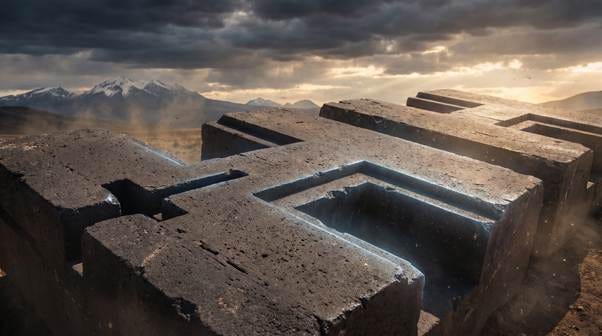
There are ancient ruins that impress through sheer scale. Puma Punku does something more unsettling. Scattered across the Bolivian Altiplano are stone blocks so sharply cut, so geometrically controlled, and so mechanically suggestive that they can feel less like the remains of a ruined monument than the dismantled components of a system whose purpose has never been fully explained.
That is why Puma Punku continues to fascinate readers. The site is not just old, mysterious, or remote. Its real power lies in the unnerving precision of its stonework: interlocking forms, clamp sockets, flat planes, and repeated geometries that seem to invite structural analysis rather than romantic speculation.
This article approaches that mystery through a viral but disciplined question: what if Puma Punku’s most controversial features are worth examining not as decorative oddities, but as engineering clues? Read that way, the site becomes more than an archaeological curiosity. It becomes a testable architectural puzzle and perhaps one of the ancient world’s strangest.
The Puzzle in the Stone
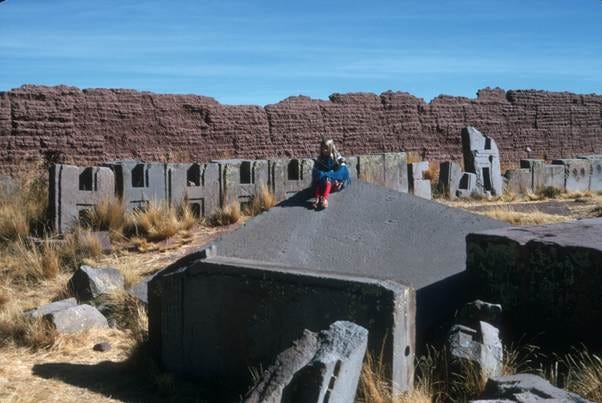
The blocks at Puma Punku are not carved in the way most ancient stonework is carved. They are machined. Flat faces meet at perfect angles. Channels run with uniform depth and width. Interlocking geometries repeat with a precision that suggests templates, not improvisation.
