

What if the towering stone monuments of antiquity - from Stonehenge to Göbekli Tepe - weren't just aligned with the stars, but tuned to the universe itself? This fascinating exploration reveals how ancient civilizations may have understood something profound that modern archaeology is only beginning to rediscover: that sacred structures weren't merely built to be seen, but to be heard.
In 1697, William Congreve, a British playwright, wrote that:
“Musick hath Charms to sooth a savage Breast, To soften Rocks, or bend a knotted Oak. I’ve read, that things inanimate have mov’d, and, as with living Souls, have been inform’d, by Magick Numbers and persuasive Sound.”
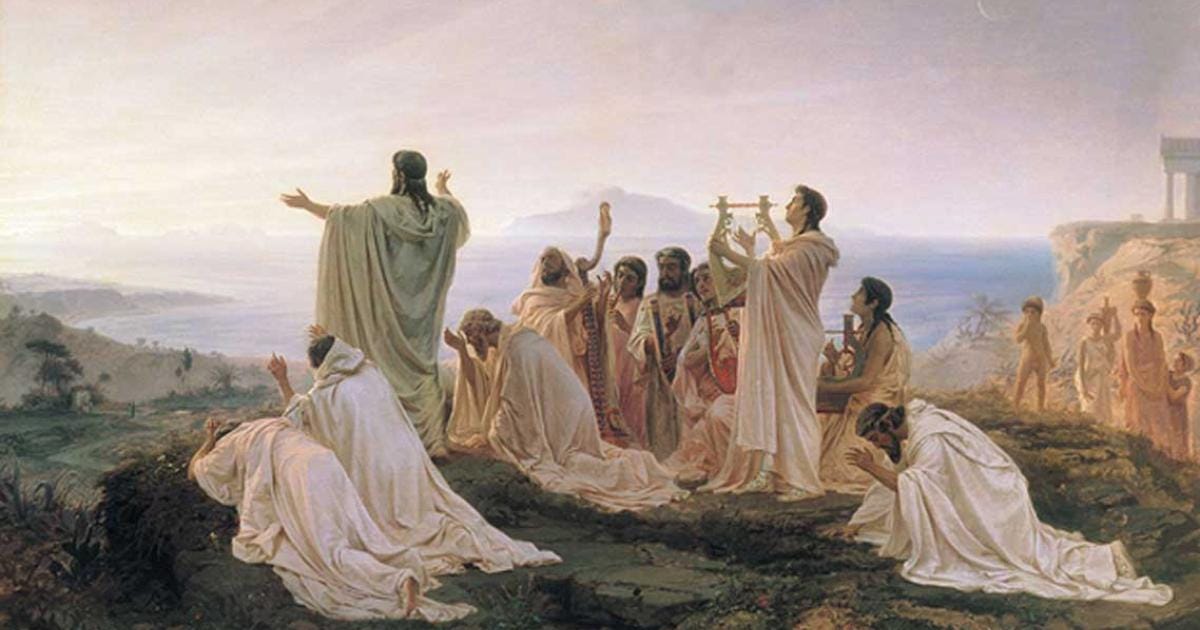
The study of the magical, mathematical properties in music goes all the way back to an ancient Greek mathematician named Pythagoras, the ‘father’ of modern geometry. He was the first to recognize the unique qualities of the musical intervals, or the space between notes on a musical scale, that he called the ‘perfect’ fourth and the ‘perfect’ fifth. His name for these intervals, ‘perfect’, stays with them to this day. Other intervals are designated either major or minor.
