

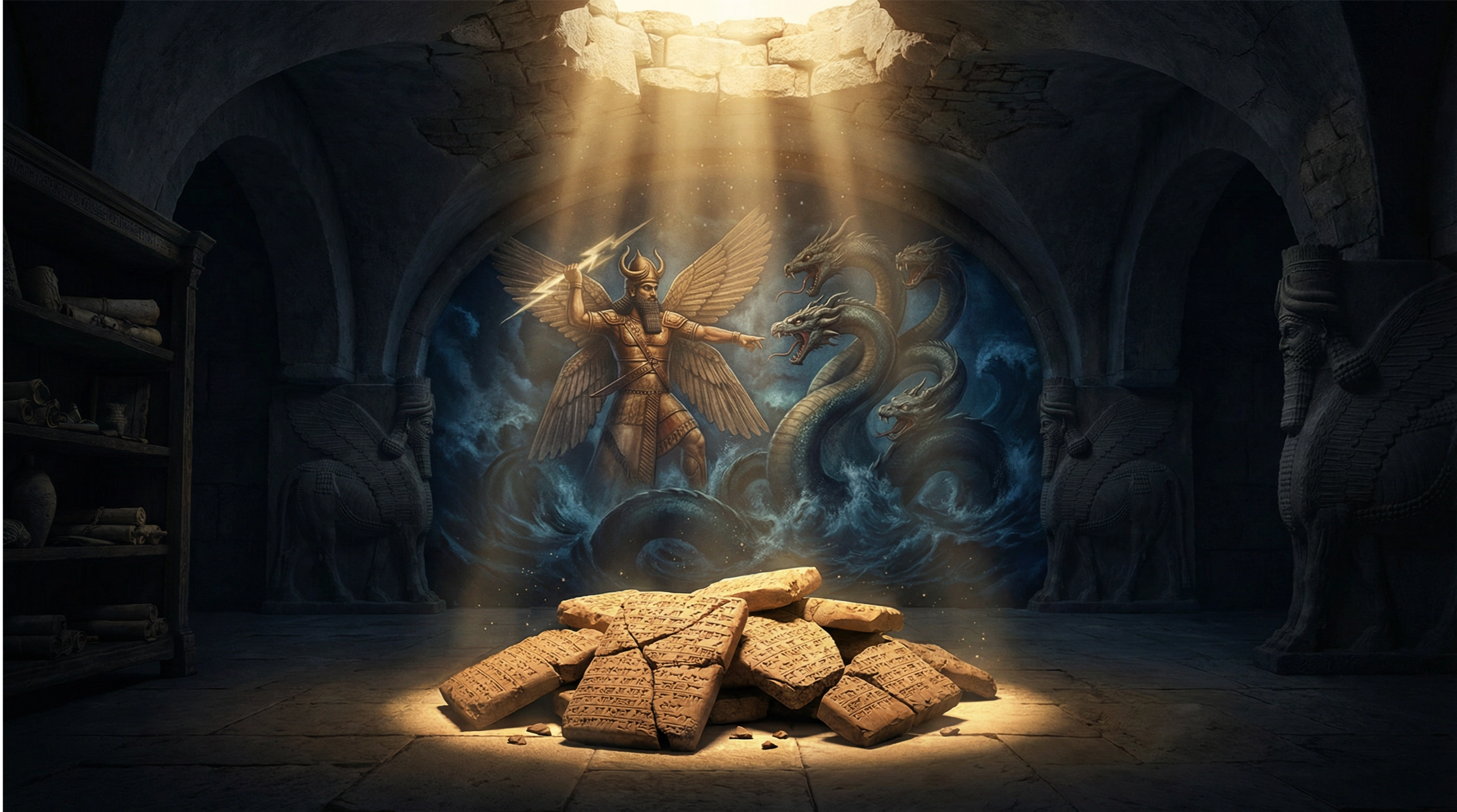
Before the ink was even dry on his translation, George Smith was a blasphemer. To the public, he was either a brilliant upstart who had unlocked the secrets of a lost civilization or a dangerous heretic whose discovery threatened to shatter the very foundations of Western faith. The source of this firestorm? A handful of broken clay tablets from the ruins of ancient Nineveh, on which Smith, a self-taught engraver’s apprentice, had found the unthinkable: a creation story, complete with a great flood, that was chillingly similar to the account in Genesis, yet undeniably older.
This is the story of the Chaldean Account of Genesis, a discovery that exploded out of the quiet halls of the British Museum in 1872 and sent shockwaves through the worlds of science, religion, and history. It is the tale of a man who, by deciphering the “bird tracks” of cuneiform, unearthed a narrative of warring gods, primeval chaos, and a world born from the corpse of a slain sea-goddess. More than just an intellectual puzzle, Smith’s work was a stick of dynamite tossed into the settled certainties of the 19th century, forcing a confrontation between sacred scripture and the ever-expanding map of human history.
George Smith was born in 1840 in London to poor parents, and consequently left school at the tender age of fifteen to take up an apprenticeship with Messrs Bradburry and Evans, a firm of engravers situated not far from the British Museum. Young George worked hard and saved his wages to buy all the latest works about Mesopotamia, the Land Between the Rivers.
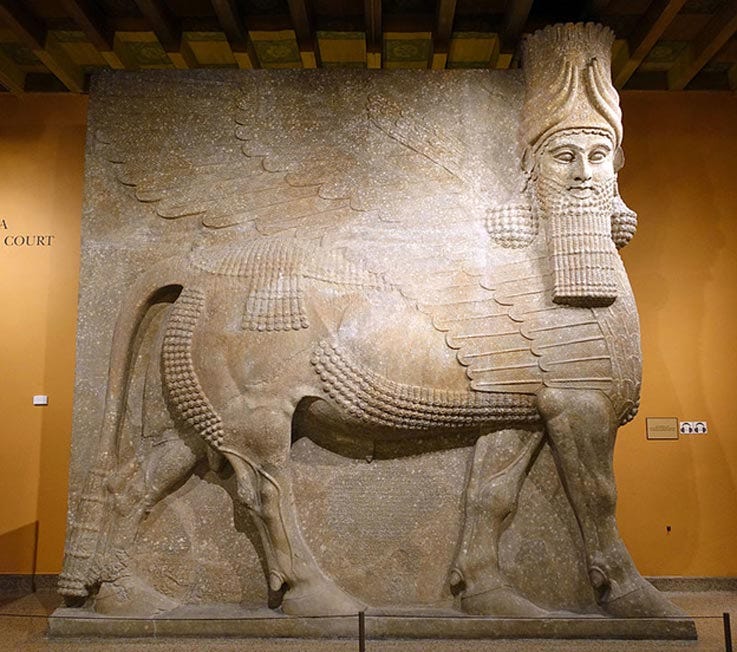
Often he would spend his lunchtimes marveling at the then-recent discoveries from the ancient city of Nineveh that were housed in the museum. The magnificent alabaster statues of human-headed lions and bulls with wings, fabulous five-legged beasts, bas-reliefs depicting scenes of war, richly engraved chests, coins and paintings all proclaiming a civilization whose existence has been blurred by time into mere legend.
It was here, within the hallowed halls of the museum, that the young engraver caught glimpses of two of the leading archaeologists of the time, Sir Henry Rawlinson and Sir Austen Henry Layard.
Gifted Code Breaker
It was a passing comment by a museum attendant that spurred George on to greater things. What if someone could read “them bird tracks”? What secrets were locked away on the thousands of cuneiform-covered fragments of clay tablets that filled the back storeroom? George Smith decided he was going to learn to read the ancient Sumerian script.


