

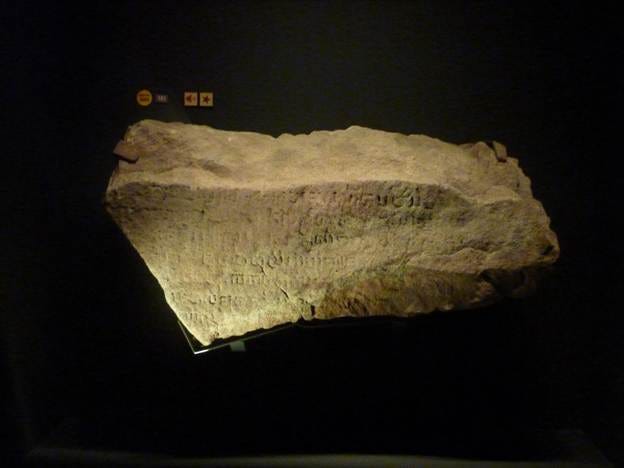

For almost 200 years, the Singapore Stone has been one of the Southeast Asian’s unsolved inscription mysteries. It was once a massive sandstone monolith at the mouth of the Singapore River, with an undecipherable inscription which is thought to be the result of the sophisticated maritime Nusantara writing system with Indic influence. But this silent witness to history was destroyed, in 1843, when the British colonial expansion works blew it apart, to open up the river passage.
What remains today are not the stone surfaces themselves, but rather a group of “mediated witnesses” such as sketches, rubbings and facsimiles created by 19th-century antiquarians. This loss brings about a huge methodological problem: how can one study a text if the text itself does not exist? The most important question is how do we not impose contemporary ideas onto a damaged and incomplete record?
These are the questions that underpin my research. Unlike the conventional approach to decipherment, which is usually based on “inspired guesswork,” I created a computational, component-based method that allows the existing 19th-century facsimiles to be measured as a data set. What is created is a “witness-first computational epigraphy framework”: a repeatable system of physically removing marks from a text, while simultaneously removing the subjective component of reading its meaning.
The Tragedy of 1843: An Inscription Lost to Empire
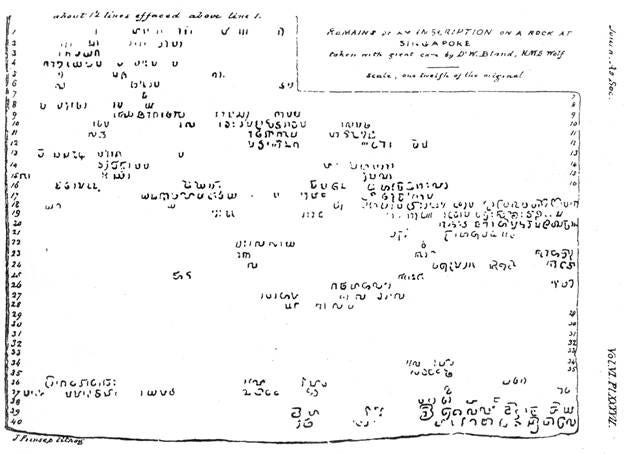

The seriousness of this digital reconstruction can only be appreciated by considering the actual loss in physical terms. The majestic old stone of coarse-grained sandstone, the Singapore Stone, stood almost 3 metres (10 feet) tall at the mouth of the Singapore River in the early 19th century. It has been a silent sentinel of the Nusantara’s sea power for centuries.
In 1843 however, during the British colonization of the area, the stone was simply denigrated for an expansion of the river passage for trade. The scholars and the Malay community pleaded with the authorities to save the monolith, but it failed to save.The locals’ and the Malay community’s wishes were sought and their cry of “Save the monolith” was not honored with the preservation of the stone. The pieces were either used as fill for roads or thrown away, and we only have small palm-sized pieces and the 19th century drawings which make up our “mediated witnesses.” It was a loss of stone, but it was the erasure of an era as well. The idea of a “Digital Surgeon” approach that I am developing is not just a technical project, but an effort to do an operation on an object of history, to repair its wounds with data.
From Blurry Ink to Mathematical Truth: A Case Study
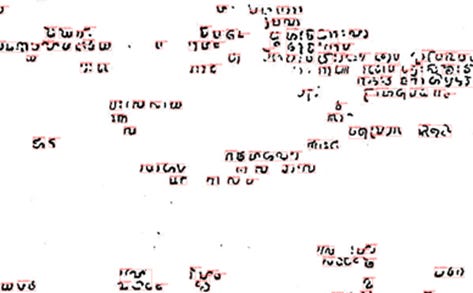
Let’s look at a single dense area of marks in the upper-right quadrant of the facsimile, to demonstrate the power of the Python pipeline I’ve created. This area looks like a jumble of ink and curves to the naked eye. A traditional epigrapher would subjectively “see” a given vowel here on the basis of his or her linguistic intuition.
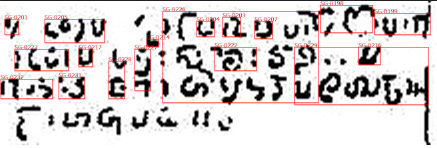
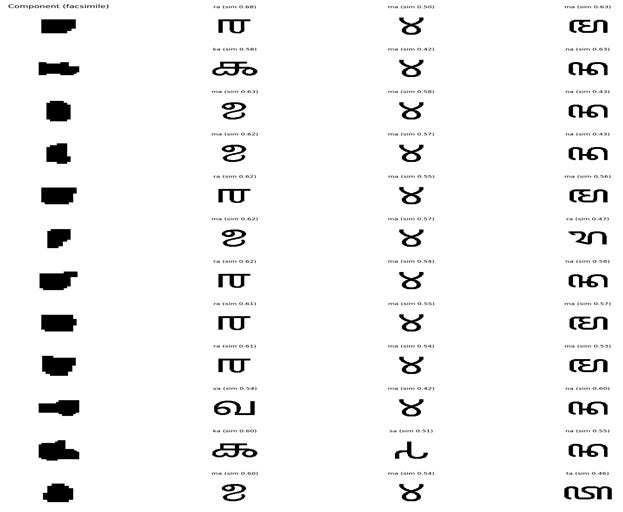
This cluster, however, was broken down to its elemental graphical units in my framework. For instance, a small, hooked mark, called Component SG-0142 was isolated, and its coordinates in a bounding box were calculated with precision by performing CLAHE contrast enhancement. When I did the template similarity scoring it wasn’t like the system “guessed” its identity. It determined a cosine similarity (COS) score of 0.87 to a specific kawi diacritic. My method takes the focus off of ‘what I think I saw’ and onto ‘what the data measures’–and converts a fuzzy historical drawing into a testable, verifiable series of digital evidence.
A Melting Pot of the Nusantara: The Hybridity Evidence
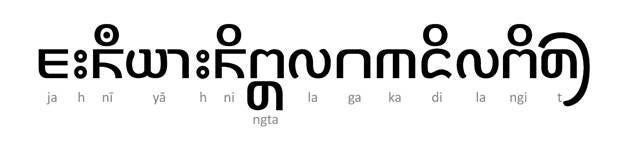

Perhaps the most significant historical takeaway from the computational analysis enabled by my framework is the script’s hybridity. So, my findings suggest there is no one stand-alone script tradition. Instead, the data shows a profile of a “contact zone” - a very intriguing synthesis of South Indian Grantha influences and the insular Javanese/Kawi ductus.
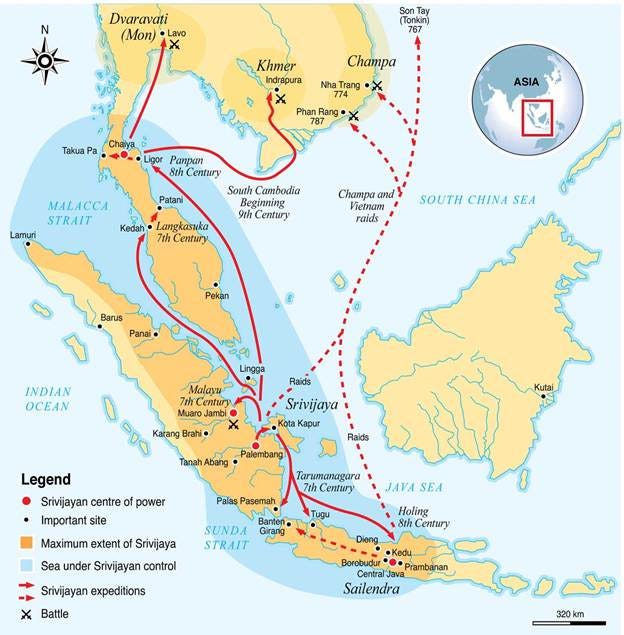
This hybridization is a mathematical account of the ancient Singapore’s geopolitical situation. The Stone of Singapore was not an isolated island but a crossroads of the maritime empires of Majapahit and Srivijaya, and the trade winds of the Indian Ocean. This was a real example of cultural exchange throughout the archipelago and is captured in the script. According to our research, the Stone was an integral part of a writing culture that spanned the entire Nusantara region—now just being reclaimed by the data science framework that I am developing as a cornerstone in the Nusantara identity.
Moving Beyond Traditional Paleography
Traditional paleography is a heavily visual art for which expertise is essential to achieve a correct identification. A scholar interprets any surviving marks, consults writings known to them, and suggests what the writing may have meant on that basis. This approach is useful, but there is a significant challenge when processing fragments – interpreting can easily become intuitive. What is seen above is the way in which gaps are filled in the mind, following the rule of completion in an unconscious manner, based on the traditional patterns of Sanskrit, Old Malay, or Javanese.
My framework starts long before language identification, in order to minimize this bias. It is a much simpler question, objective question: What is there in the witness physically? Rather than beginning with sounds, I consider the facsimile to be a visual field made up of measurable graphical units. I then used a python pipeline to pull all the traces I could see and gave each a permanent audited name, e.g. SG-0001 and SG-0002. We can now establish an auditable evidential trail by connecting each component to precise coordinates within its bounding box. All future interpretive claims can now be traced to a specific visible unit within the witness.
What is Computational Epigraphy?
In this research, computational epigraphy is not used as an automated “decipherment machine,” but as a rigorous method of evidence stabilization. The workflow has three analytically different stages:
Component Based Diplomatic Transcription: Separating each ink mark from the noise and editorial marks.
Statistically-driven Word Segmentation: Gap analysis using mathematical techniques, rather than relying on linguistic knowledge.
Conservative Graphemic Hypothesis Formation: The comparison of isolated shapes to script libraries (Grantha, Brahmi and Kawi) for calculating visual affinity.
This separation helps to avoid contamination of the raw data by interpretation. The decipherment of the Singapore Stone is not final, closed or definitive. It is instead hoping to create a clear-cut analytical platform, a “digital forensic kit”, where the global research community can now test, challenge and build on the evidence of this missing treasure of Nusantara.
In this section, the Three-Stage Digital Forensic Pipeline: Stabilizing a Ghost is presented.
My research relies on a “cold” auditable pipeline in Python, to overcome the limits of human intuition. This system is based on a facsimile of the 19th century, and sees it not as a drawing to be read, but as a complex set of data to be dissected. The process is subdivided into three carefully waded steps that guarantee that the interpretation never taints the raw evidence.
Stage One: Component-Based Diplomatic Transcription
In the first stage, the whole attention is directed to visual extraction, meaning separating the ink of the past from the noise. The facsimile was subjected to a sequence of digital operations: normalization to gray levels, contrast improvement (CLAHE), Gaussian smoothing and Otsu thresholding. These processes help the workflow to distinguish the actual marks from background textures and paper decay.
The system performed Connected-Component Labeling operation on the image and identified 351 distinct graphical units. However, facsimiles tend to combine original inscriptional marks with editorial marks such as captions and frame features. To address this, I divided the data into four layers:
The Inscription Layer: Fundamental marks from the text.
The Caption/Marginal Layers: Editorial notes and numbering.
The Frame Layer: What is left over from the reproduction process.
These were filtered to leave 273 marks with inscriptions. Each is given a permanent identifier (e.g. SG-0001), so that each future claim can be linked to a specific, measurable coordinate.
Second Stage: Statistical Boundary Imputation
The second stage is called Statistical Boundary Imputation. The second stage is known as the Statistical Boundary Imputation.
Determining word breaks (where one word ends and the next begins) is one of the leading difficulties of epigraphy, particularly with damaged texts with no clear spacing. Instead of relying on language, I mathematically inferred line structures using DBSCAN (Density-Based Spatial Clustering of Applications with Noise).
This resulted in 32 approximate line bands. In these lines, we computed horizontal gap statistics. Once the threshold was reached, it detected 81 different “tokens. We ran a sensitivity analysis by changing these thresholds, and watched how the tokens merged or split. This was a fundamental discovery: the text is unstable and that isn’t a problem, it’s a quality of the witness. Within this framework, uncertainty is regarded as a data point and not a failure.
Stage Three: Graphemic Hypothesis Formation
It wasn’t until the marks had stabilized that we started to ask questions about meaning. The shapes of the extracted components were compared with a limited template library of three families of script: Grantha script, proxy forms related to Brahmi, and proxy forms related to Javanese/Kawi.
The system computed “visual affinities” using the cosine overlap measurements. The results were remarkable; the Singapore Stone has a hybrid profile. There are some elements similar to Grantha-like elements and others very similar to Javanese/Kawi elements. This implies that the stone was the result of the “contact-zone” writing culture of the Nusantara, a place where there was a dynamic circulation of scripts through trade and diplomacy.
The Power of Negative Results

History has a tendency to go in the direction of certainty. Scholars have a sense of urgency to offer a definitive interpretation. I chose the other way. For me, negative outcomes are big breakthroughs.
If a line did not behave regularly, or if a line with many transcribed lines emerged to be hard to segment and/or consistently hard to categorize as a “vowel suppressor,” these were captured as evidential lines. These limitations can be translated into the analytical structure, avoiding the creation of “artificial certainty. This is how the future of computational humanities will look: a system that provides answers but also records where the evidence stops and the mystery begins.
In addition to the Artifact, there are materials and resources for the broader topic of “Decolonizing History through Data.
The Singapore Stone is not just a local inscriptional puzzle but a snapshot of a larger problem affecting heritage in Southeast Asia. To understand early history, a huge amount of material has to be pieced together from “fragmented witnesses”: sketches made during the colonial period, crumbling manuscripts, and damaged rubbings of now-lost monuments, spread across the Nusantara and the rest of the Indic-influenced world. The archives containing the secrets of maritime empires were in danger due to environmental degradation, war and the physical destruction that often followed colonial expansion.
While traditional historical methods are vital, there are times when they become impractical or simply are “too human” to work with such disjointed documents. It is here that computational epigraphy can be transformative. I have been trying to move away from “fixed” interpretations of the texts and onto reproducible digital pipelines, making a machine-readable archive. The SG-identifier system turns the facsimile of the 19th century into an active platform for analysis, which can be expanded.
Future scholars will not be confined to my findings as each mark will have a permanent identifier that will be kept and can be audited. They can:
Repeat segmentation thresholds to experiment with different boundaries.
Increase the size of the script libraries as new archeological finds are discovered in the region.
If new fragments are found or high quality casts are available, then introduce 3D imaging or RTI (Reflectance Transformation Imaging) data.
Test alternative graphemic hypotheses with the current mathematical coordinates of the traces.
Transparency as a tool for decolonization
This work has a strong philosophical element. The destruction of the Singapore Stone had occurred in 1843 and was a result of colonial engineering that had “orphaned” the history of the area. Scholarship has been forced to work in the wake of that loss for almost two hundred years, and has been relying on closed systems of expert authority. In the past, when a senior scholar suggested a reading, the next generation of researchers was left with few resources to the raw process of evidence that lead to the reading.
I challenge this model with my framework – which focuses on transparency rather than authority. We cannot bring back the original sandstone monolith, but we can make sure that every segmentation decision, every boundary line and every uncertainty is apparent and testable. In this way, the project is not only about recovering a lost inscription, it is also about decolonizing the process of historical reconstruction. It puts the evidence back into the public domain and gives the next generation of researchers the evidence, not just the conclusion.
The Future: Uncertainty as Structured Evidence
The method of this project has more far-reaching implications. The Singapore Stone has been made a proving ground for a radical concept in heritage studies - how to design digital systems in which there is uncertainty, rather than uncertain uncertainty.
In my opinion, it is a definite yes. The future of computational heritage research is the combination of the machine learning-based shape clustering, the FAIR (Findable, Accessible, Interoperable, and Reusable) linked datasets and TEI/EpiDoc encoding systems. None of these technologies, however, are planned to be used in lieu of human historical judgment. Rather, they serve to enhance and clarify the evidential transparency on which that judgment is made.
This system wasn’t built to claim a complete and definite decoding. I designed it to build a bridge between the broken past and the digital future, with the ability to be audited. Although the Singapore Stone is yet to be definitively translated, for the first time, the witness who survived the crash is being examined as a computational artifact. No more speculation on a mystery, but only the recording of what remains.
A Digital Bridge to the Nusantara: The Future of the Past
In the end, the importance of this research goes beyond the use of python scripts or statistical clustering of pixels; it’s about a basic change of attitude towards the “ghosts of our common past. In 1843 the Singapore Stone was physically silenced through an explosion that erased it from the epigraphic record of the Nusantara, an act of colonial erasure. For almost 200 years, scholars have tried to fill that gap with “creative” conjecture, frequently imposing contemporary linguistic slants on a weak 19th-century witness. Using T2T creates a mathematically clear path to reading the stone, and does not simply try to “read” the stone. The “traditional model of academic authority” has been replaced by a “model of radical transparency,” one in which every ink trace becomes an auditable digital identifier, or “SG-0001,” and each uncertainty is recorded as a discovery.
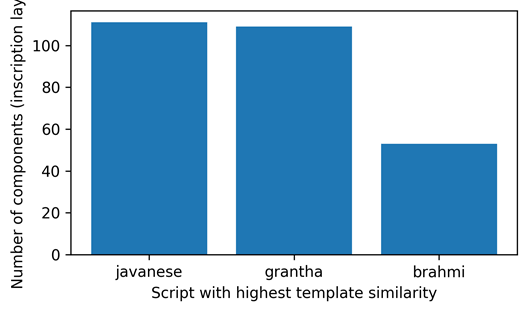
This ‘witness-first’ approach is designed to make the facsimile a dynamic analytical tool rather than a historic image. The scripts of the maritime exchange networks in the ancient Indonesian archipelago, such as Kawi, Grantha and Brahmi, are fluid and dynamic, existing in a contact zone of trade and diplomacy. Now, with our digital forensic kit we can afford to honor that fluidity, calculating affinities instead of imposing rigid identities. With this open access system handed over to the next generation of researchers, the Singapore Stone is no longer a ‘lost’ mystery. Once broken, it is no longer a testament to a shared cultural identity, but now, it is a computational mathematics stabilized, eternally preserved, and revisited with each new breakthrough in computational linguistics. This is not a system of decipherment but a system of permanent audit trail that will make the past speak for itself, bit by bit.