

Did Pilots, Spies, and Satellites Really Find Noah’s Ark on Mount Ararat?
“For behold, I will bring a flood of waters upon the earth…
everything that is on the earth shall die…For forty days,
the flood kept coming…The waters flooded the earth
for a hundred and fifty days…the Ark came to
rest on the mountains of Ararat.”
— Genesis 6:14 to 7:4.
“There are two ways to be fooled. One is to believe what
isn’t true; the other is to refuse to believe what is true.”
— Søren Kierkegaard, Danish philosopher.
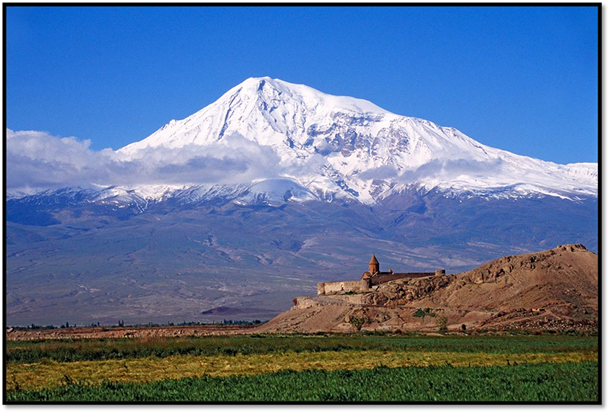
For centuries, Mount Ararat has stood at the center of one of history’s greatest mysteries. Rising above eastern Turkey near the borders of Armenia and Iran, this snow-covered volcanic giant has long been linked to the Biblical account of Noah’s Ark. But in the last century, the story has moved beyond scripture and legend. Pilots, soldiers, explorers, and satellite analysts have all claimed to see something high on Ararat’s frozen slopes: a large, strange object that does not seem to belong there.
During my 21-year U.S. Air Force career, I was stationed at Incirlik Air Base in south-central Turkey from 1994 to 1996. While assigned there, I read a fascinating and provocative book, The Incredible Discovery of Noah’s Ark, by Charles E. Sellier and David W. Balsiger (1995), which presented scientific claims, eyewitness testimony, and military reports suggesting that the Biblical Noah’s Ark may still exist high upon the glacial slopes of Mount Ararat.
That claim may sound extraordinary. But Ararat is no ordinary mountain. With its massive ice cap, brutal weather, dangerous terrain, and extreme isolation, it would be one of the most difficult places on earth to investigate thoroughly. If a great wooden vessel had indeed come to rest there in antiquity, there are few places better suited to keeping it hidden.
