

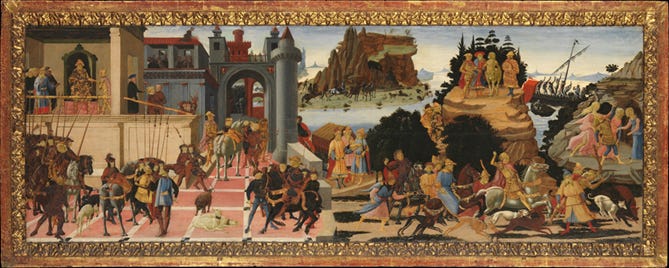
Could the Golden Fleece be more than a myth? On a wind-cut boulder above the Caspian, an ancient carving may preserve the voyage that Greek poets later transformed into the story of Jason and the Argonauts.
Stand on the upper terrace of Böyükdaş at Gobustan, Azerbaijan, and look across the broken limestone landscape toward the Caspian lowlands. Around you are massive rocks covered with images left by people who occupied this place for thousands of years. On Rock 29 is a composition that may preserve something far more specific than a generic scene of prehistoric life: a large oared vessel, water-like markings, armed figures moving across rough ground, and an unusual raised terminal at one end of the boat.
Taken together, those details raise a tantalising question: was the original expedition carved into stone thousands of years before it became Greece’s most famous adventure?
The evidence is provocative and it leads from a cave behind the engraving to a transformed Caspian shoreline and a possible route across the Caucasus.
