

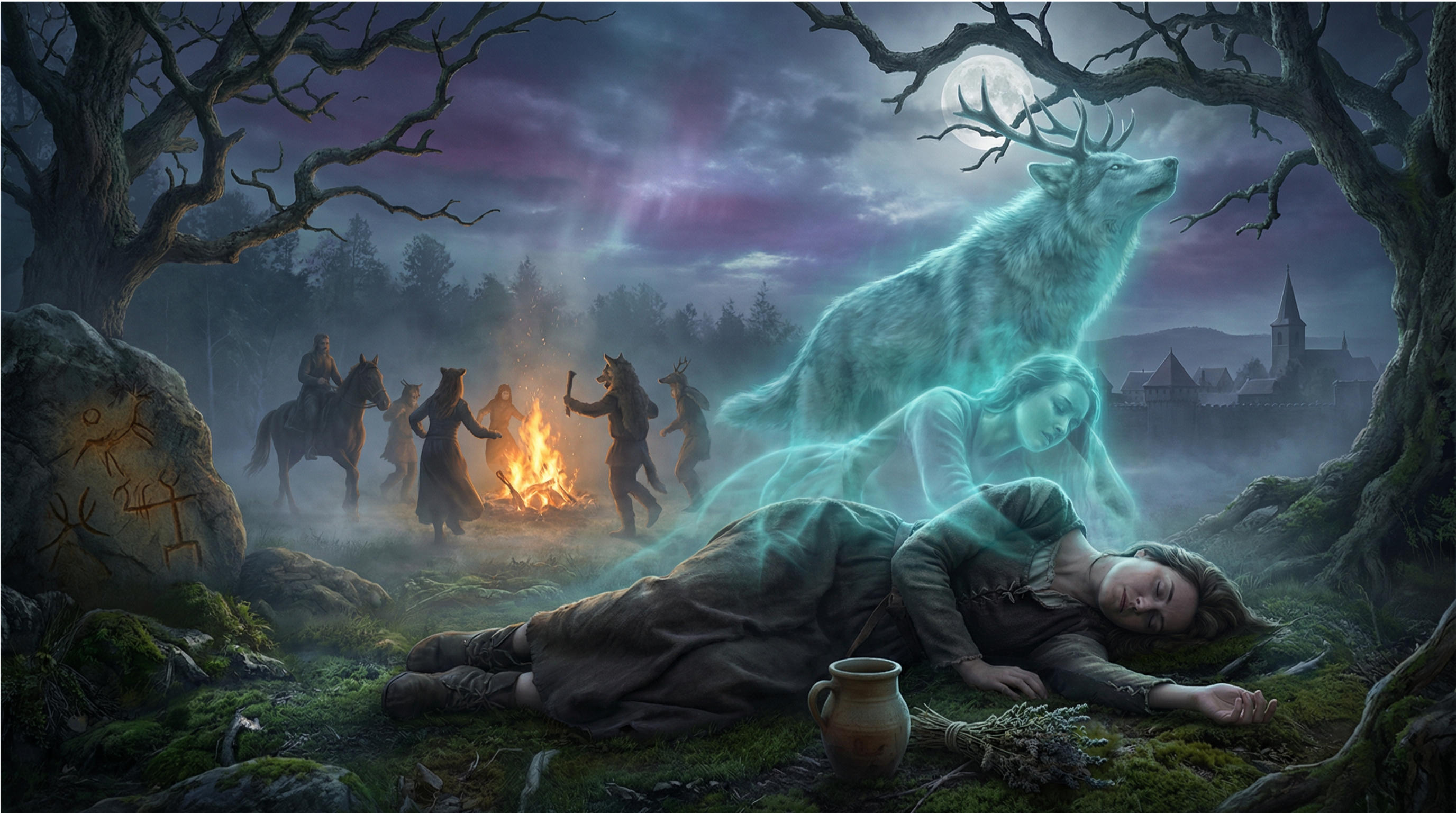
‘The witches are carried sometimes in their bodies and clothes, at other times without, and the examiner thinks their bodies are sometimes left behind. Even when their spirits only are present, yet they know one another.’
For centuries, the image of the witches’ Sabbath has been seared into the popular imagination: a diabolical midnight gathering of cackling hags, consorting with the Devil, and brewing evil potions from the fat of stolen children. This is the version of the story recorded in the annals of the Inquisition, a narrative of heresy and depravity used to justify the torture and execution of tens of thousands across Europe. But what if this official account, extracted under duress and filtered through the lens of religious paranoia, is a grotesque distortion of the truth? What if the real witches’ Sabbath was something far older, stranger, and more profound?
This article delves into the controversial thesis that the Sabbath was not a fantasy of devil-worship, but the last vestige of a pre-Christian shamanic tradition, a genuine spiritual practice centered on ecstatic, out-of-body experiences. It explores how the accused witches’ own accounts of spirit flight, animal transformation, and metaphysical journeys were systematically reinterpreted by their persecutors into a satanic pact. By peeling back the layers of historical bias, we uncover a hidden history of shamanic ecstasy, a world where the body could be left behind as the spirit traveled to otherworldly realms, a practice that was not evil, but simply unacceptable to the rigid orthodoxy of the Church.
Mere Fantasies of Mountain Peasants
Indeed, heavy-weight historians such as Hugh Trevor-Roper insisted that the only legitimate interpretation of the evidence from witch trials was as a function of social and cultural attitudes towards an aberrant cult. The voices of the persecuted were conveyed to us exclusively through the lens of the secular and clerical judiciary, and, according to Trevor-Roper, it was only the attitudes of these cultural elites that could be discerned from the documentation. The actual recorded beliefs of the accused witches were simply ‘disturbances of a psychotic nature’, ‘fantasies of mountain peasants’, and ‘mental rubbish of peasant credulity and feminine hysteria.’ In other words, any suggestion that the witches’ sabbath was actually a real phenomenon was baloney.
Fortunately, Ginzburg’s iconoclastic work was a starting point for overturning this attitude, and since he wrote Ecstasies, historians have been joined by anthropologists in an ongoing attempt to unravel the reality of the witches’ sabbath, and from where that reality stemmed. Many have followed Ginzburg’s revolutionary hypothesis that, if we attempt to excavate the actual words and beliefs of the persecuted witches, we discover that the witches’ sabbath was a remnant of pre-Christian shamanism, alive and well and, until the Inquisition caught up with them, operating under the radar of the Church.
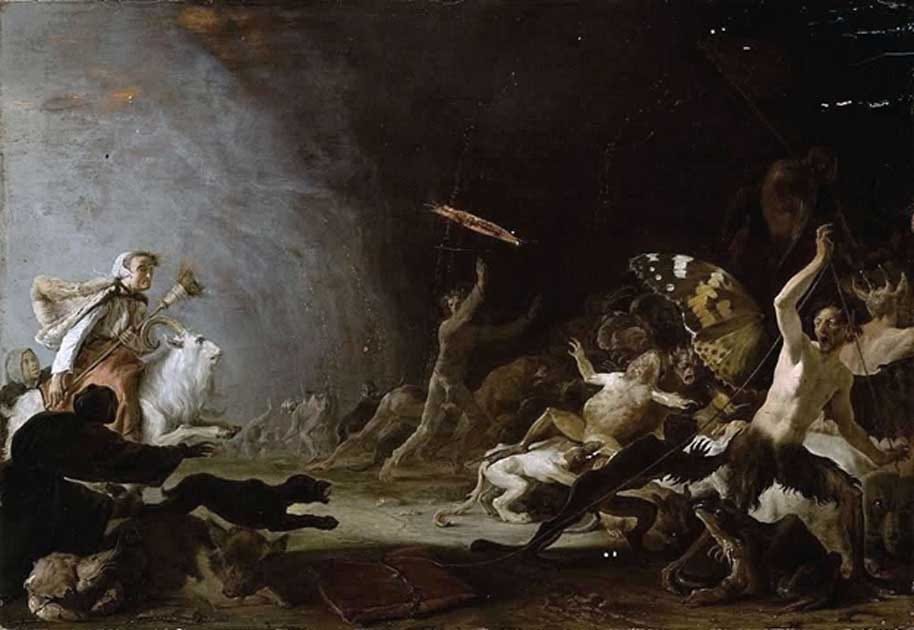
The Witches’ Sabbath – Really Homage to the Devil?
Ginzburg summarises the basic features of the sabbath that recur in many of the witch trial documents:
‘Male and female witches met at night, generally in solitary places, in fields or on mountains. Sometimes, having anointed their bodies, they flew, arriving astride poles or broomsticks; sometimes they arrived on the back of animals, or transformed into animals themselves. Those who are for the first time had to renounce the Christian faith, desecrate the sacrament and offer homage to the devil, who was present in human or (most often) animal or semi-animal form. There would follow banquets, dancing, sexual orgies. Before returning home the female and male witches received evil ointments made from children’s fat and other ingredients.’
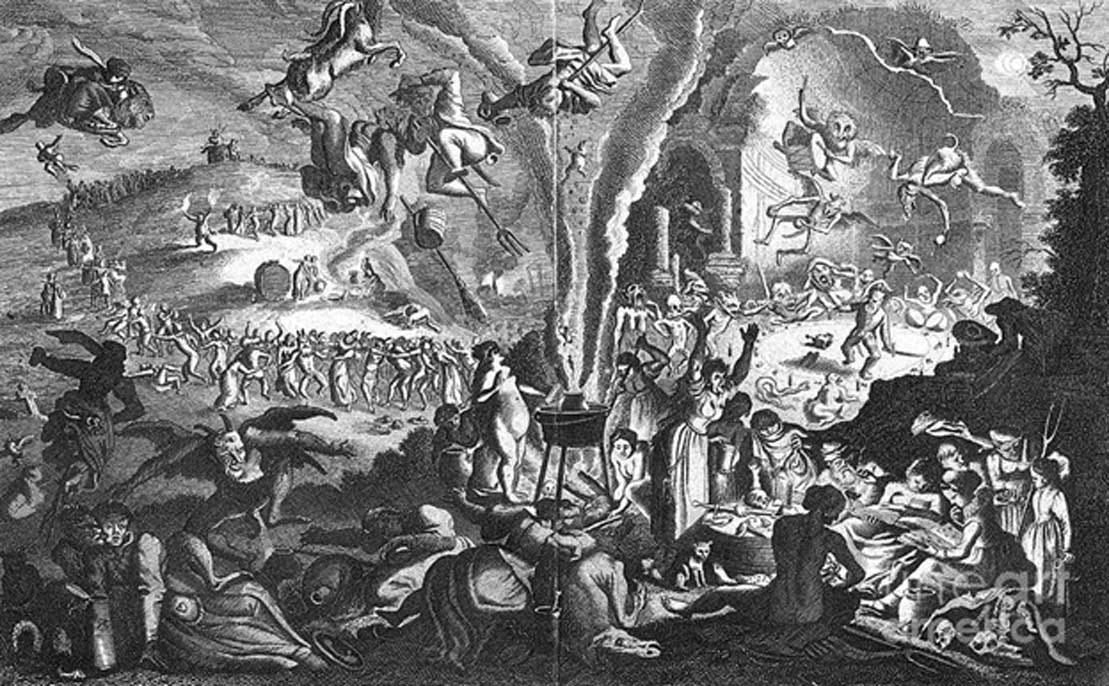
These components of the sabbath (or sabbat), as recorded by the persecutors of the witches, persist as central themes in witch trials through the later Middle Ages in Europe and, in some places, until the 18th century. Tens of thousands of people (men and women) were burned at the stake for witchcraft during this period. But what was the ontological reality of the recorded sabbaths?
Beneath the paranoiac persecution of people accused of taking part in such rituals, what was really happening?
