

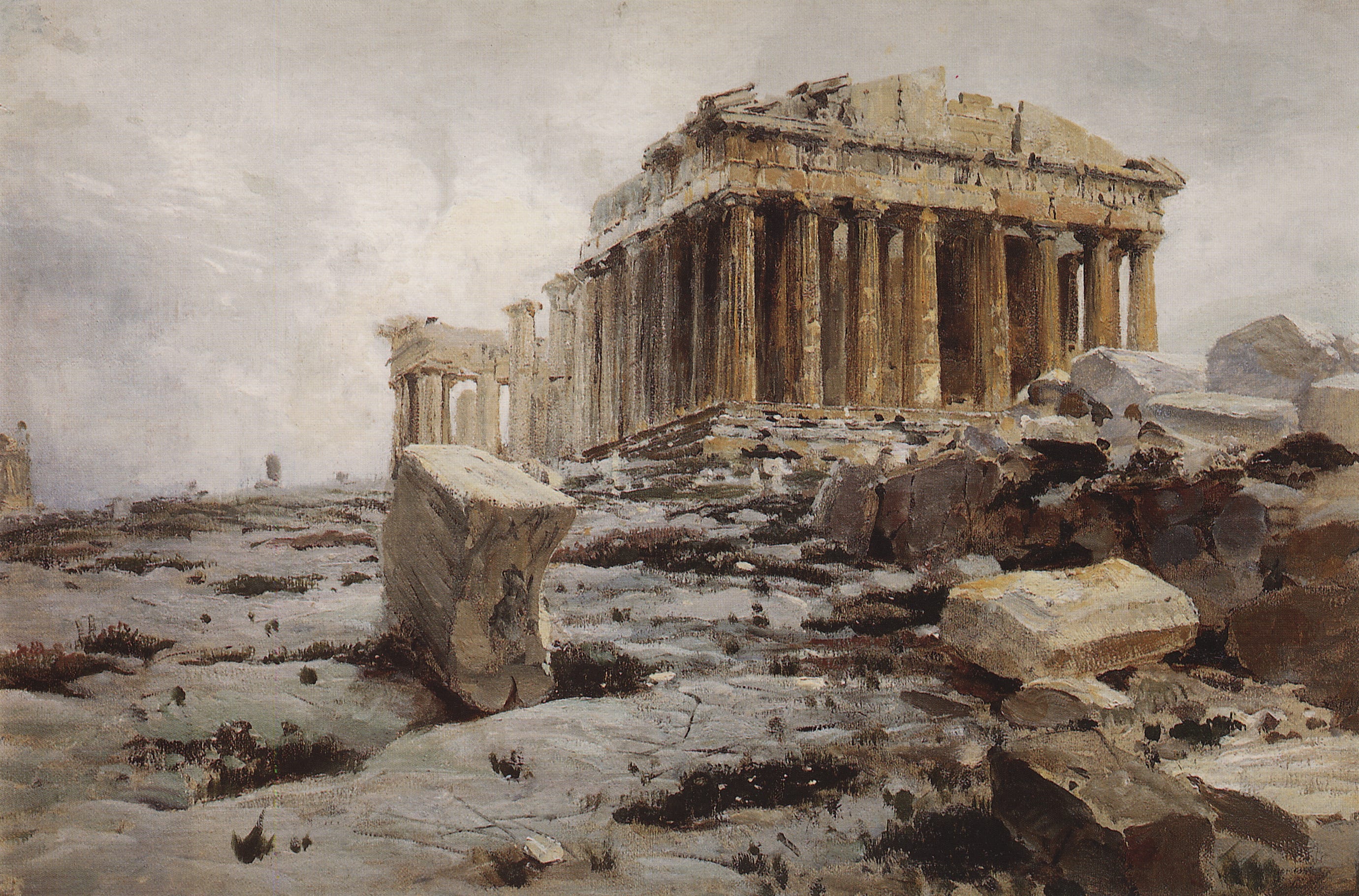
Twas thus She spoke, ”that blush of shame proclaims thee Briton, once a noble name; First of the mighty, foremost of the free, Now honoured less by all, and least by me…lo! Here, despite of wear and wasting fire, I saw successive Tyrannies expire; ‘Scaped from the ravage of the Turk and Goth, thy country sends a spoiler worse than both. Survey this vacant, violated fane; recount the relics torn and yet remain…some retribution still might Pallas (Athena) claim, when Venus half avenged Minerva’s (Roman Athena) shame.”
an excerpt from Lord Byron’s “The Curse of Minerva”
The world’s most famous cultural-property dispute began not in a courtroom, but high on the Acropolis, with scaffolding, chisels, and an ambiguous permit. More than two centuries after Lord Elgin’s agents removed and, in some cases, damaged, sculptures from the Parthenon, the “Elgin Marbles” remain at the centre of a dispute between Greece and Britain.
At stake is more than stone. The Parthenon has long stood as a beacon of democracy, philosophical inquiry, and art; its contested fragments force an enduring question: who has the right to possess the heritage of another people? This article examines the authority Elgin claimed, why Britain retained the marbles despite outrage from the outset, and whether Elgin’s own disgrace and misfortune helped inspire Lord Byron’s vision of Athena’s curse.
The Parthenon: Athena, Power, and Panhellenic Pride
Prior to discussing the marbles’ seizure, it is essential to examine the largest of the structures and the circumstances surrounding its construction and eventual decline. Built between 447- 432 BCE during Athens’ so-called “golden age,” under the reign of Pericles (495–429 BCE), the Parthenon is a Doric temple that dominates the Acropolis hill in Athens and is dedicated to Athena Parthenos (Athena the Virgin).

