

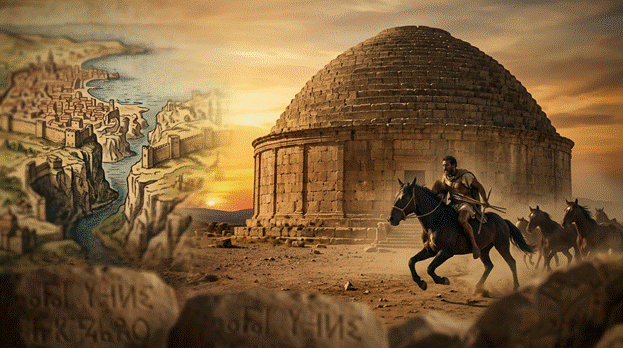
Few people know that Numidian cavalry played a decisive role in breaking Hannibal at Zama, fighting alongside Roman cavalry. That kingdom was Numidia, and for roughly two centuries it occupied what’s now Algeria, playing Rome and Carthage off each other with real nerve.
Poisoned queens, bribed senators, and a king who married Cleopatra’s daughter. It’s all in there, and almost none of it survives into the standard textbook version of the ancient Mediterranean, which treats North Africa as scenery for the Punic Wars rather than a place with its own politics and its own body count.
Here are ten reasons that need fixing.
1. Its First King Switched Sides Mid-War, and It Paid Off Enormously
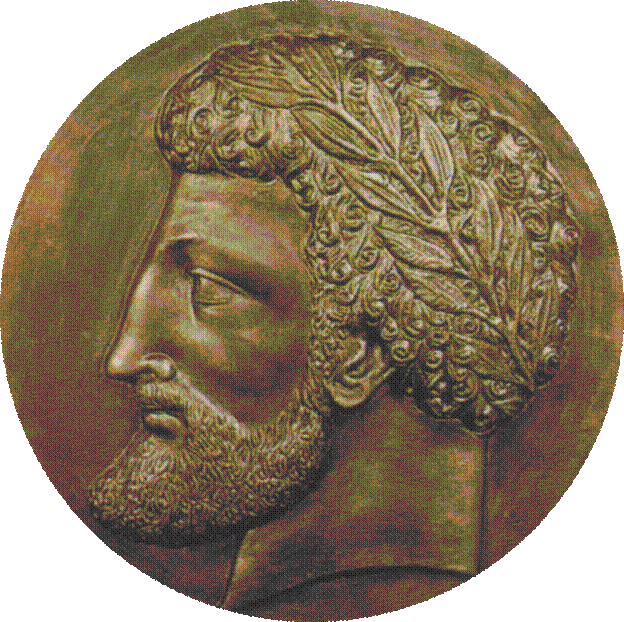
Masinissa grew up in Carthage, not Numidia - his father Gaia, an ally of the city, sent him there as a mark of that alliance. By 212 BC, Masinissa was already commanding a Numidian cavalry unit in the Carthaginian army in Spain.
That mattered, because Gaia’s death in 206 BC triggered a succession crisis. Numidian kingship passed from brother to brother before reverting to the eldest son of the deceased king, rather than directly from father to son, so Masinissa’s uncle took the throne instead, and a chaotic scramble of short reigns and a murder followed. Masinissa, off fighting for Carthage in Spain the whole time, came home to find the kingdom had burned through four rulers without him.
He fought his way onto the throne instead of inheriting it - defeating the regent Mazaetullus and reclaiming his father’s kingdom. He would soon face a much bigger threat in Syphax. Somewhere in that scramble, Masinissa decided Rome was winning the war, and switched sides, trading his cavalry for Roman backing to reclaim and unify Numidia for good.
The gamble paid off. At Zama in 202 BC, his cavalry helped Scipio Africanus deliver Hannibal’s final defeat. Rome rewarded him generously, backing him to weld Numidia’s fractured tribes into one state. He ruled it for roughly fifty years, reportedly still leading troops into his eighties.
2. His New Wife Chose Poison Over a Roman Victory Parade
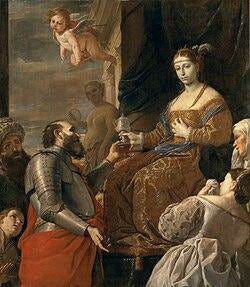
Consider Sophonisba: a Carthaginian noblewoman married off to a rival Numidian king, Syphax, to keep him loyal to Carthage. When Masinissa defeated Syphax, he married Sophonisba himself - according to Livy, the same day he captured her at Cirta.
Scipio, wary that her loyalties hadn’t changed with her husband, insisted she be surrendered to Rome. Masinissa couldn’t refuse outright, so he sent her a cup of poison instead. According to Livy’s account, she drank it without protest, remarking only that she “should have died more happily had not her marriage bed stood so near her grave” - though since Livy wrote over a century after the events, historians treat this line as literary tradition rather than a verified quotation.
Nobody doubts she died by poison rather than face Rome - only the exact wording of her final words is treated as literary tradition.
3. Its Cavalry Rode With No Saddles, No Bridles, and Basically No Equipment at All
Picture it: Numidian horsemen riding into battle on small, unarmoured horses with no bridles, controlling them with nothing more than voice and a light touch. By the standards of the time, it looked like madness.
It wasn’t reckless - it was a different philosophy of cavalry entirely, built for speed rather than collision. Small, hardy horses turned on a dime while riders threw javelins from a gallop and peeled away before an enemy line could close, wearing an army down in pieces. Historians generally describe this style as suited to scouting and harassment, but poorly suited to siege warfare.
This same cavalry proved itself on both sides of the same war. Numidian horsemen fighting for Hannibal helped make Cannae, in 216 BC, one of Rome’s worst defeats ever. A decade later, Masinissa commanded Numidian cavalry for Carthage in Spain, running a guerrilla campaign against the future Scipio Africanus - the identical skill set, aimed in opposite directions.
At Zama, that skill set turned on Hannibal instead. Masinissa’s cavalry took Scipio’s flank, rolled up the Carthaginian horsemen, then wheeled around behind Hannibal’s own infantry - one of the more decisive maneuvers of the battle, and a bitter irony for a general once protected by the very same tactics.
4. Its Most Notorious King Once Called Rome “a City for Sale”
Few remember that Jugurtha, Masinissa’s grandson, grabbed the throne by murdering a rival heir and bribing his way past everyone else - and that Rome let him get away with it for years.
Jugurtha understood something uncomfortable about the Republic: enough gold could buy a senator’s silence as easily as a soldier’s loyalty. What followed became the Jugurthine War, dragging on from roughly 112 to 105 BC - seven years of a supposedly minor client king humiliating one Roman commander after another.
The early campaigns went badly for Rome. In 110 BC, a Roman army marched on the Numidian treasury town of Suthul in midwinter, got ambushed, and was forced under the yoke, a ritual humiliation for the defeated. The commander sent to fix things fared better but still couldn’t finish the job: he beat Jugurtha in open battle and took town after town, but never caught the king, who’d switched to guerrilla warfare, vanishing into the desert wherever the Romans were thinnest.
It took Gaius Marius, one of that commander’s own officers, to end it - winning the consulship back in Rome to take over the war himself in 107 BC. Even then, the finish came down to politics: his subordinate Sulla talked Jugurtha’s own father-in-law into betraying him. Jugurtha was seized in chains in December 106 BC.
According to Sallust, when Jugurtha was forced out of Rome years earlier after a bribery scheme collapsed, he’d turned at the gates and called the city “for sale, and doomed to speedy destruction if it can only find a purchaser” - a sharp line, sharper still since he was losing at that exact moment. He was paraded through Rome in Marius’s triumph, then thrown into a cold cell beneath the city, where he’s said to have starved to death.
Sallust had his own scores to settle with Rome’s elite when he wrote this decades later, so the quote may be more legend than transcript.
5. It Helped Keep Rome Fed
Numidia had been “utterly barren” before Masinissa’s reign, according to the Greek historian Polybius, who credited him with being the first to show it could produce cultivated crops as well as any land.
Historians note that this agricultural transformation gave Numidia real strategic value to Rome - though whether it was the deciding factor in Rome’s long tolerance of Numidian independence remains a matter of interpretation rather than settled fact.
6. Its Capital Is Now One of Algeria’s Biggest Cities
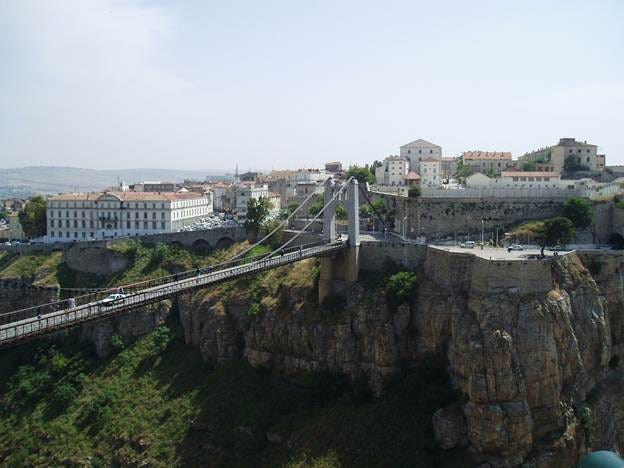
The kingdom’s capital, Cirta, sat on a rocky plateau ringed by deep river gorges - a nightmare to besiege, easy to defend from any direction.
Under Masinissa and his heirs, it became a major trading hub anchoring the coast to the interior.
It had a darker side too: Jugurtha’s rebellion began with a massacre at Cirta, when he captured the city and slaughtered the Roman and Italian residents there, along with his rival claimant to the throne.
Today it’s the Algerian city of Constantine, still perched over the same gorge, just with a few more bridges strung across it.
7. A Later King Chose the Wrong Side in a Roman Civil War
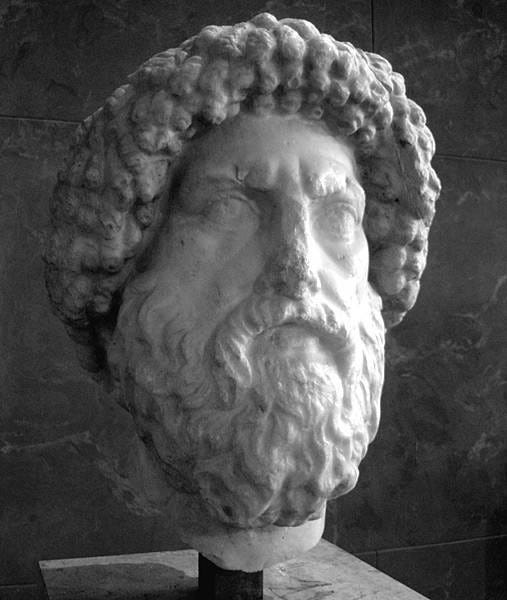
Not every Numidian king shared Masinissa’s talent for picking winners. When Caesar and Pompey went to war, King Juba I backed Pompey, partly out of a personal grudge against Caesar, who had once insulted him by pulling his beard during a Roman trial.
Caesar crushed the Pompeian forces, Numidian army included, at Thapsus in 46 BC. Cut off from his capital with nowhere to run, Juba I fought a Roman ally, Marcus Petreius, in single combat rather than be captured - both men died in the duel, and Juba had one of his own slaves finish the job rather than live as anyone’s prisoner. Numidia lost its independence outright, annexed as a Roman province.
8. His Son Was Marched Through Rome as a Child Prisoner, Then Grew Up to Rule Anyway
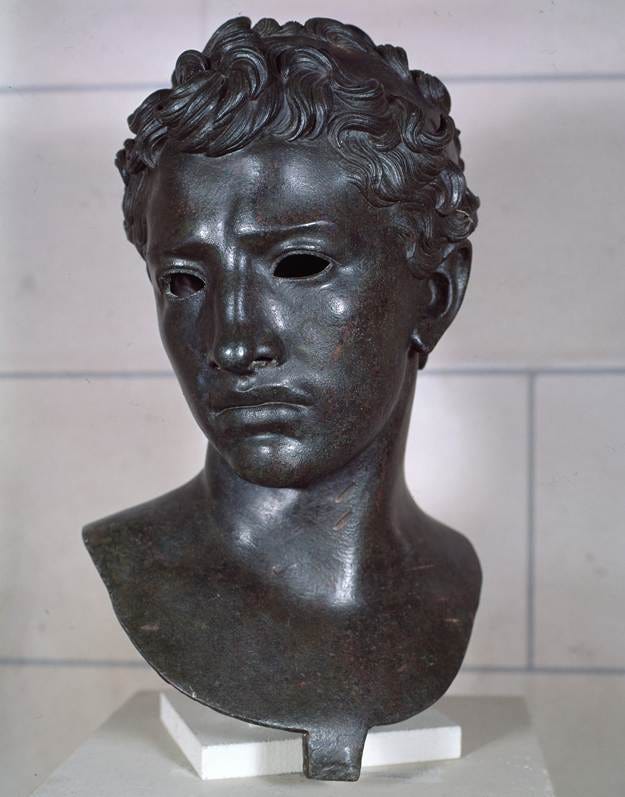
Juba II arrived in Rome as a small child, paraded through the streets as living proof of his father’s defeat.
It’s a grim start, but not where the story ends. Raised in Roman households, well educated, and close to the future emperor Augustus, Juba II was installed as king of Numidia around 29 BC, then made ruler of Mauretania in 25 BC after Numidia was absorbed into the Roman province of Africa. He became one of Rome’s more genuinely respected scholar-kings, writing on geography, history, and natural science, with later Roman authors citing his work for generations.
9. He Married Cleopatra’s Daughter
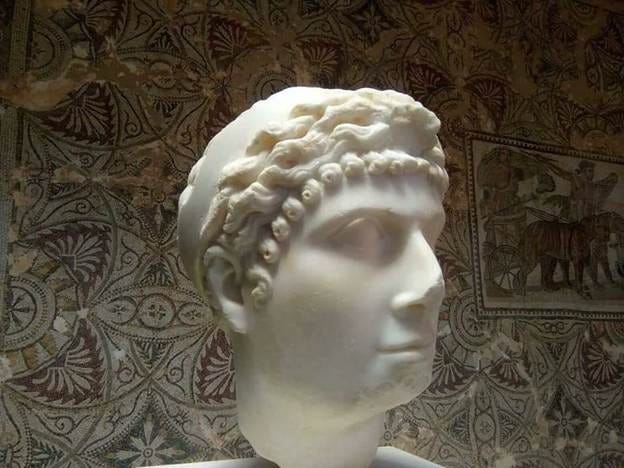
This detail is genuine, however unlikely it seems: Augustus arranged a marriage between Juba II and Cleopatra Selene II, daughter of Cleopatra VII and Mark Antony, sometime between 26 and 20 BC. Like Juba, she’d been paraded through Rome as a child in Augustus’s triumph after her parents’ defeat at Actium.
Their marriage stitched together the political leftovers of two defeated dynasties into one Rome-approved household. The couple ruled Mauretania jointly, renaming their capital Caesarea in Augustus’s honor - the site survives today as the Algerian coastal town of Cherchell.
10. Its Kings Built Stone Monuments That Are Still Standing
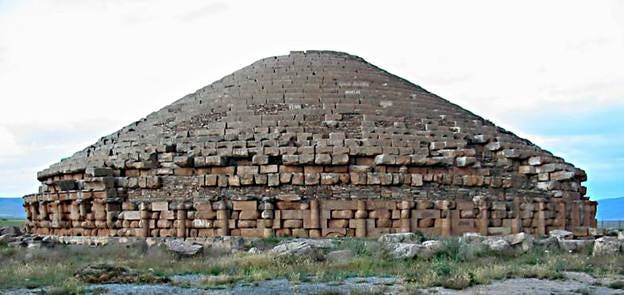
Consider the Medracen: a cylindrical stone tomb near Batna, roughly 59 meters across and 18.5 meters tall.
Its design is a genuine hybrid: a circular base ringed by sixty engaged Doric columns, topped with an Egyptian-style cornice, crowned by a cone built in twenty-three narrow steps. A Numidian tomb dressed in Greek and Egyptian clothing, proof its builders had seen architecture far from home. A radiocarbon date suggests the tomb was built for an unknown Numidian king who lived in the fourth century BC - centuries before Masinissa’s reign, and long before any of the Numidian kings named elsewhere in this article.
Nobody knows for certain which king is buried inside, which somehow makes it more impressive rather than less. Nineteenth-century excavators found the burial chamber already looted, empty long before archaeologists arrived. A similar, larger version was later built for Juba II and Cleopatra Selene II near their capital.
Both have outlasted two thousand years of weather, war, and looters - and they’re still standing today.
By Sedik Azzouz
References
1. Britannica, “Masinissa” — https://www.britannica.com/biography/Masinissa
2. Livius.org, “Massinissa” — https://www.livius.org/articles/person/massinissa/
3. Livy, History of Rome, 29.29–30 (Perseus) — https://www.perseus.tufts.edu/hopper/text?doc=Perseus:text:1999.02.0144:book=29:chapter=29
4. Livy, History of Rome, 30.12–15 (Perseus) — https://www.perseus.tufts.edu/hopper/text?doc=Perseus:text:1999.02.0144:book=30:chapter=12
5. Livy, History of Rome, 21 & 35.11 (Perseus) — https://www.perseus.tufts.edu/hopper/text?doc=Perseus:text:1999.02.0144:book=35:chapter=11
6. Polybius, Histories, 3.116 & 15.14 (Perseus) — https://www.perseus.tufts.edu/hopper/text?doc=Perseus:text:1999.01.0234:book=3:chapter=116
7. Sallust, The Jugurthine War, chs. 12, 26, 35, 38, 54, 84, 113 (Perseus) — https://www.perseus.tufts.edu/hopper/text?doc=Perseus:text:1999.02.0126:chapter=35
8. Plutarch, Life of Marius, 12 (Lexundria) — https://lexundria.com/plut_mar/12/prr
9. Suetonius, Life of Julius Caesar, 71 (Penelope/Univ. of Chicago) — https://penelope.uchicago.edu/Thayer/E/Roman/Texts/Suetonius/12Caesars/Julius*.html#71
10. Cassius Dio, Roman History, 43.8.4 (Lexundria) — https://lexundria.com/dio/43.8.4/cy
11. Britannica, “Juba II” — https://www.britannica.com/biography/Juba-II
12. CoinWeek, “Juba II: A North African Prince...” — https://coinweek.com/juba-ii-a-north-african-prince-at-the-nexus-of-the-roman-world/
13. Numisview, “Cleopatra Selene II” — https://numisview.com/reference/people/cleopatra-selene-ii
14. Suda On Line, “Massanasses” (Polybius 36.16) — https://www.cs.uky.edu/~raphael/sol/sol-entries/mu/245
15. ArchNet, “Medrassen” — https://archnet.org/sites/18896
16. Livius.org, “Madghacen” — https://livius.org/articles/place/madghacen